
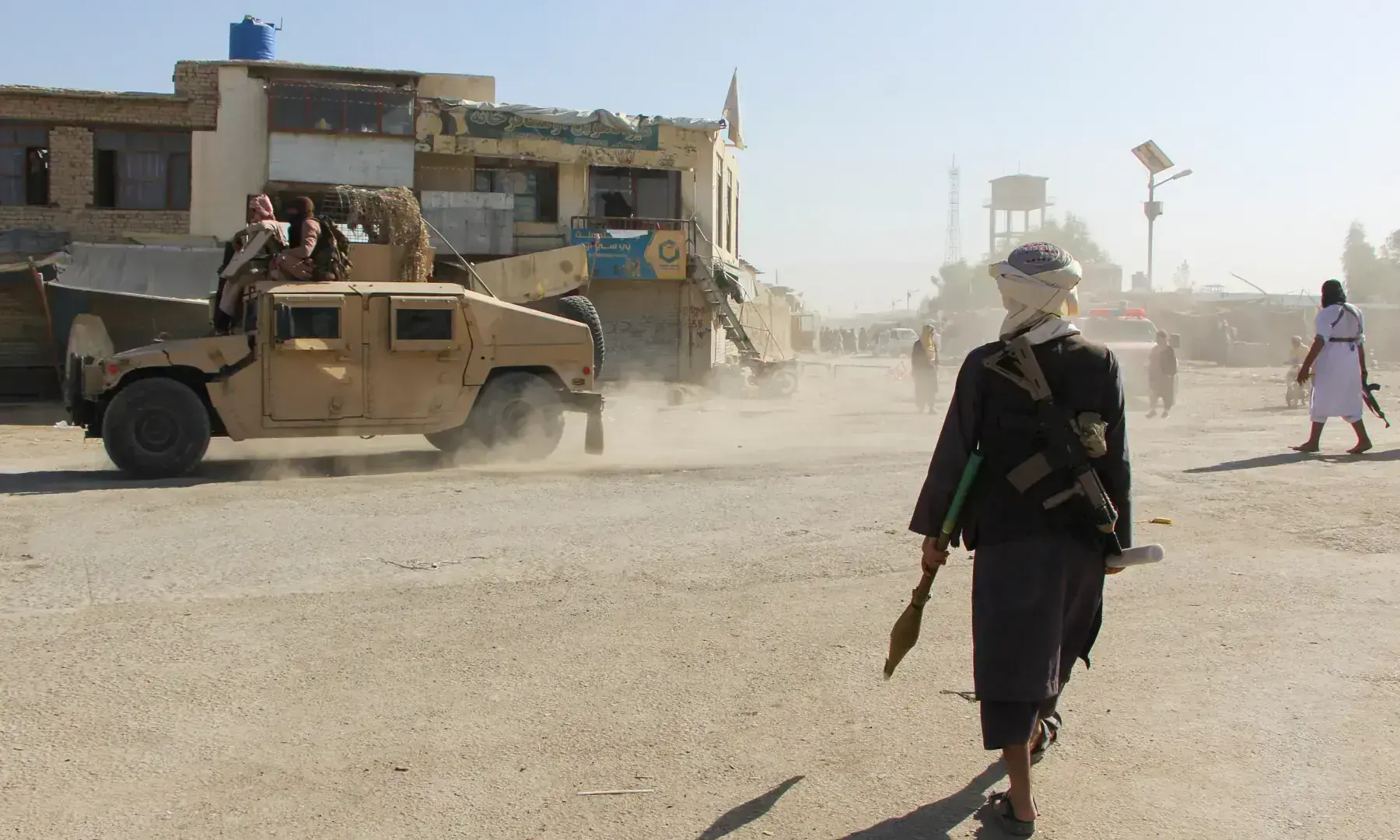
KABUL/ISLAMABAD - The Afghan Taliban administration has once again rejected allegations that it provides sanctuary or logistical support to Tehreek-i-Taliban Pakistan (TTP) militants on Afghan soil, even as multiple United Nations reports and international assessments point to a growing militant presence along the Pakistan-Afghanistan border .
Afghan Taliban : We are not providing shelter or support to TTP terrorists on Afghan soil.
- Schlangenjäger (@Shadowfox_11) May 6, 2026
Also Taliban Leadership : 📸 https://t.co/hGShGd6N6j pic.twitter.com/OOipz40Inz
In a continued denial of longstanding accusations from Islamabad, Taliban officials maintain that Afghanistan's territory is not being used for attacks against neighboring countries, insisting that Pakistan's security challenges are internal matters .
The Taliban's Position
The Afghan Taliban, who have been the de facto ruling authority in Kabul since August 2021, have consistently rejected claims that militant groups operate from Afghan territory. They assert that they have fulfilled their commitments under the 2020 Doha Agreement, which required them to prevent Afghan soil from being used to threaten other nations .
According to Taliban officials, Pakistan's security issues are domestic in nature, and allegations of cross-border militancy are exaggerated or fabricated .
UN Security Council Findings
Despite these denials, a series of reports from the United Nations Security Council's Analytical Support and Sanctions Monitoring Team have painted a sharply different picture.
The 16th report of the Monitoring Team, submitted under UNSC resolution 2763, has directly described the Taliban's claim of no terrorist footprint in Afghanistan as "not credible" .
The UN findings reveal:
Militant Presence: An estimated 6,000 TTP fighters are present in Afghanistan, with locations concentrated in the provinces of Khost, Kunar, Nangarhar, Paktika, and Paktiya. The group's leadership maintains a presence in Kabul .
Operational Capability: TTP has conducted "numerous high-profile attacks in Pakistan from Afghan soil," with over 600 attacks recorded in Pakistan during 2025. Many of these incidents were described as "complex in nature, involving multiple, coordinated attackers using methods such as vehicle-borne improvised explosive devices" .
Advanced Weaponry: The monitoring team noted that access to weapons and equipment left behind following the withdrawal of US and NATO forces has increased the lethality of TTP attacks. The group has reportedly used advanced firearms, night-vision devices, thermal imaging equipment, and drone-based attack platforms .
Al-Qaeda Linkages: The report states that Al-Qaeda continues to enjoy patronage inside Afghanistan, providing training and advisory support particularly to the TTP. The leadership of Al-Qaeda in the Indian Subcontinent is assessed to be present in Kabul .
International Concerns
The international community has taken note of the growing militant presence. UN Secretary-General Antonio Guterres has voiced "deep concern" over the support reportedly provided to TTP for cross-border terrorism, calling on the Taliban to ensure that no terrorist outfit operates from Afghanistan into other countries .
A report by the American journal Eurasia Review has alleged an "undeclared understanding" exists between the Afghan Taliban and TTP, claiming that Taliban leadership publicly denies the presence of TTP fighters because acknowledging it could invite international pressure for decisive action .
Former Afghan National Security Adviser Ahmad Zia Saraj has also made serious claims about alleged cooperation between the Taliban regime and TTP, including the provision of safe havens and modern weapons to militant organizations .
Pakistani Perspective
Islamabad has hardened its stance on cross-border terrorism, maintaining that the Afghan Taliban are providing sanctuary to TTP, which remains a direct threat to Pakistani national sovereignty. These facts, according to Pakistani officials, have been verified by numerous reports and assessments released by independent forums and regional stakeholders .
Pakistan has shifted from diplomatic appeals to direct kinetic action, declaring a state of "open war" against the Taliban regime in early 2026 following intense border clashes and TTP suicide attacks. This has included airstrikes targeting TTP hideouts in Afghan urban centers .
Efforts at Dialogue
Despite the ongoing conflict, informal talks between representatives close to the Taliban and Pakistan were held in Istanbul, Türkiye, concluding with both sides reaching a general agreement on issues related to militant groups. Negotiators have called for the Taliban to designate the TTP as a terrorist organization, while Pakistan would acknowledge the presence of Islamic State within its territory. A draft agreement has been finalized, though the text has not yet been made available .
Continued Violence
The tensions have translated into real-world violence. On May 7, 2026, six people, including two children, were killed when mortar shells hit a market in the Thall area of Hangu district in Khyber Pakhtunkhwa, a province bordering Afghanistan. Police officials have noted an increase in militant attacks in Pakistan since the Afghan Taliban took over Kabul .
The Gap Between Claim and Reality
While the Taliban's official position remains that no terrorist groups operate from Afghan soil, the weight of UN documentation, international assessments, and ongoing cross-border violence suggests a significant gap between official claims and ground realities. The question of whether the Taliban can or will act to address these concerns remains unresolved.
For now, Pakistan continues to demand "visible and verifiable" proof of a crackdown on TTP training camps and leadership, while cross-border tensions show little sign of abating .

