
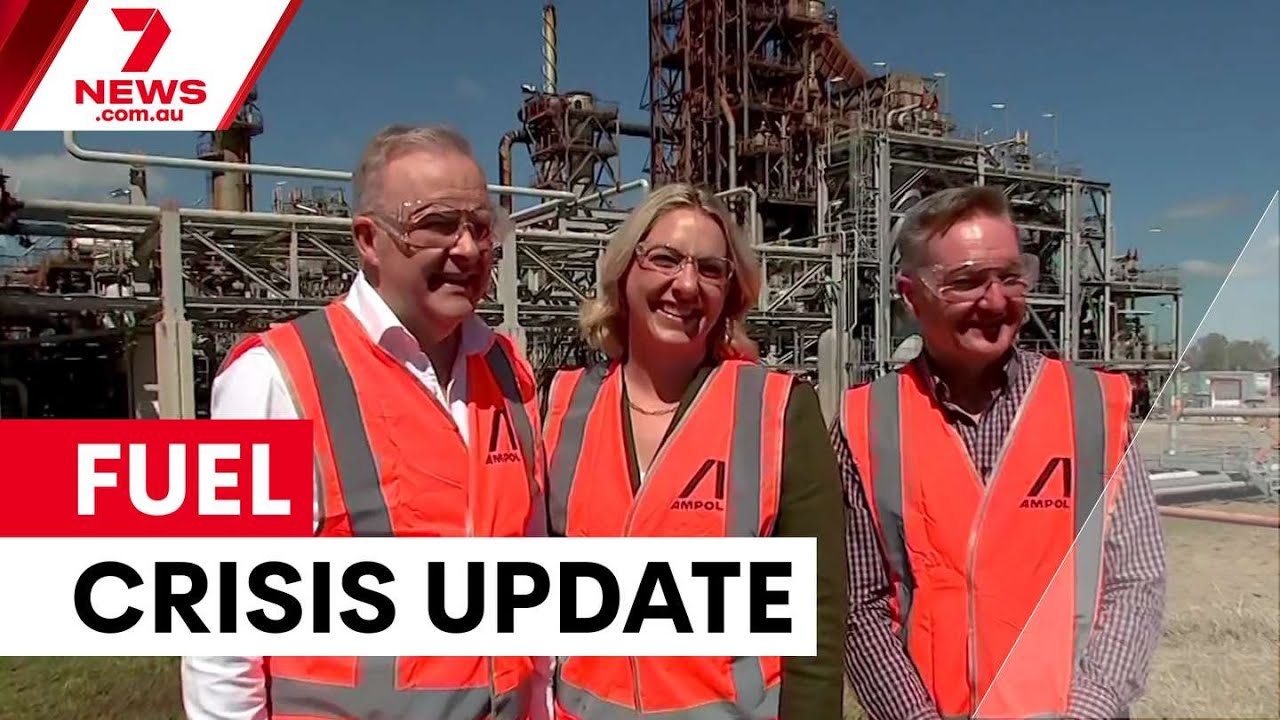
CANBERRA - In a landmark move to shield the nation from unprecedented global energy shocks, Prime Minister Anthony Albanese has announced a 7.24billion(A7.24billion(A10 billion) package to drastically boost Australia's fuel stockpiles and establish its first-ever government-owned fuel reserve .
Australia commits $7 billion to boost fuel stockpiles, create government reserve.#Australia #FuelSecurity #EnergyCrisis #OilMarket #GlobalEconomy #EnergyPolicy #AsiaOne #AsiaOneNews pic.twitter.com/tUJs3ITLXz
- ASIA ONE NEWS (@AsiaOne_News) May 6, 2026
The "Australian Fuel Security and Resilience package," to be unveiled in next week's federal budget, is a direct response to the ongoing crisis in the Middle East, which has effectively closed the Strait of Hormuz-a chokepoint through which 20% of the world's oil passes . Australia imports nearly 80% of its fuel, leaving it dangerously exposed to supply chain disruptions .
"The Biggest Oil Crisis"
"This is the biggest oil crisis that the world has ever seen, with an impact in every country, but in particular in our region," Albanese told reporters in Sydney. "This is aimed at making sure that Australians can have more confidence in protecting our energy sovereignty, not just during this crisis, but going forward" .
The package is built on three key pillars:
A National Fuel Reserve ($2.3 billion): For the first time, the government will directly own a strategic reserve of approximately 1 billion litres of diesel and aviation fuel. This stockpile will be strategically located to address regional shortages during emergencies .
Industry Support ($5.4 billion): A significant portion of the funds will establish a "Fuel and Fertiliser Security Facility," offering loans, guarantees, and price support to private companies to encourage them to purchase and store more fuel domestically .
Higher Stockholding Requirements: The mandatory stockholding obligation for fuel importers and refiners will be raised by approximately 10 days for all fuel types, aiming to bring Australia's onshore critical fuel reserves to a minimum of 50 days of supply .
A "Big Change" in Policy
Energy Minister Chris Bowen noted that Australia was previously in the minority of International Energy Agency (IEA) nations without a government-controlled reserve. "We will now have a government-owned fuel reserve of around a billion litres... This is a big change in our approach as a country and a good one," he said .
The government has also allocated $10 million for feasibility studies into new or expanded domestic oil refining capabilities, signaling a long-term strategy to reduce reliance on foreign imports .
Reactions and Criticism
While the announcement has been welcomed as a necessary step to "future-proof" the nation, it has also drawn criticism. Opposition Leader Angus Taylor called the plan "too little, too late," arguing that the Coalition would instead push for reserves to meet the full 90-day requirement outlined in international energy treaties .
Conversely, environmental groups criticized the initiative for propping up fossil fuel dependence. Amanda McKenzie from the Climate Council argued that "true energy security means unshackling ourselves from price hikes and supply shocks that foreign oil drives" by investing in electric vehicles instead .

