
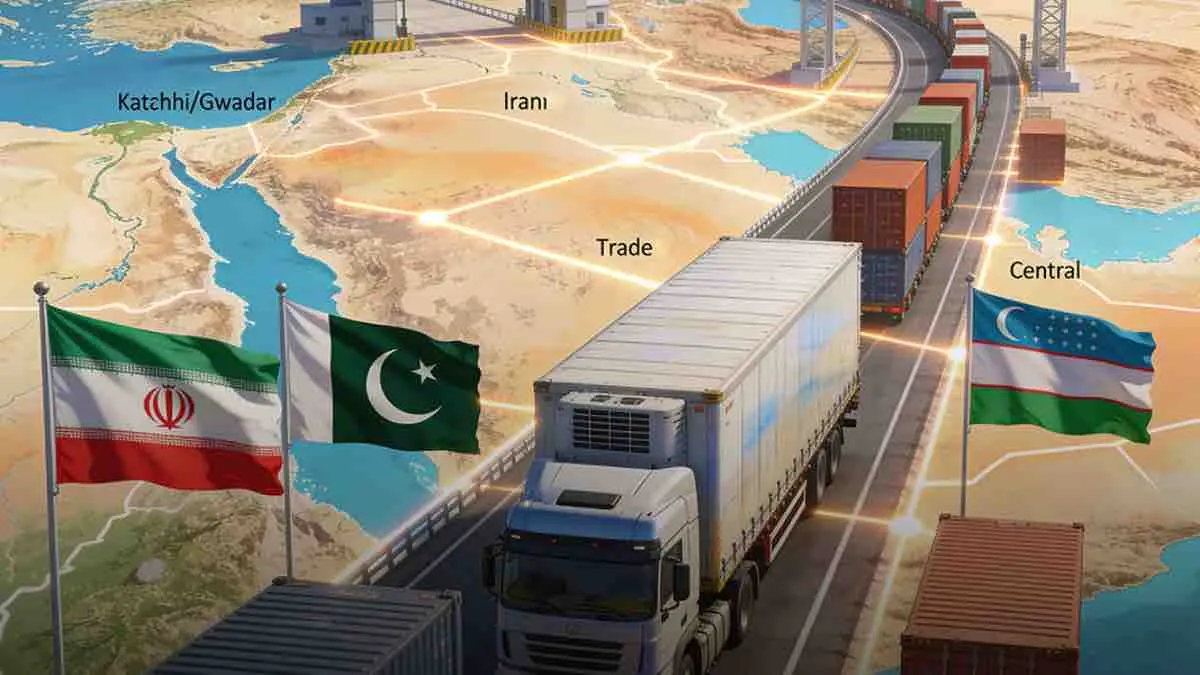
ISLAMABAD - In a landmark decision with profound geopolitical and economic implications, the Pakistan Ministry of Commerce has officially authorized the transit of goods from third countries through Pakistani territory to the Islamic Republic of Iran.
Under the new directive, goods originating from other nations will be permitted to pass via three key Pakistani entry and exit points:
Gwadar Port - Pakistan's crown jewel on the Arabian Sea
Karachi Port - The country's largest and busiest maritime hub
Taftan - The border crossing point connecting Pakistan to Iran's eastern province of Sistan-Baluchestan
The announcement, made earlier today, is being hailed as a strategic masterstroke that simultaneously boosts Pakistan's regional trade ambitions while extending a crucial economic lifeline to neighboring Iran.
For years, Gwadar Port has been envisioned as the heart of the China-Pakistan Economic Corridor (CPEC) and a gateway to Central Asia and the Middle East. This new transit policy transforms that vision into operational reality.
Analysts predict that Gwadar will now evolve from a developing port into a bustling regional transshipment hub, connecting East Asian, South Asian, and Gulf exporters directly to the Iranian market - and potentially beyond to Turkey, the Caucasus, and Europe.
"This decision puts Gwadar on the map not just as a Pakistani port, but as a corridor for the entire region. Iran gets access, Pakistan gets revenue, and global supply chains get a new, strategically located alternative."
- Regional Trade Economist, Islamabad
The timing of the announcement is significant. With Iran continuing to face debilitating international sanctions and economic pressure, Pakistan's decision represents:
A tangible show of solidarity with its western neighbor
Access to affordable shipping routes via Karachi and Gwadar, bypassing more expensive or blocked alternatives
Reduced dependency on longer, costlier maritime routes through the Persian Gulf and the Strait of Hormuz
Goods arriving at Pakistani ports will now be able to move overland through Balochistan to the Taftan border crossing, providing Iran with a vital supply line for food, medicine, raw materials, and consumer goods.
The transit policy is expected to have ripple effects far beyond Islamabad and Tehran:
| Country | Potential Benefit |
|---|---|
| China | Greater utilization of CPEC infrastructure; access to Iranian markets |
| Central Asian states | Alternative trade route via Pakistan to warm waters and Iran |
| Turkey & Europe | Overland connectivity through Iran to Pakistan's ports |
| Gulf states | Potential to route goods to Iran via Pakistan instead of direct shipping |
| Afghanistan | Opportunity to join transit arrangements (pending stability) |
While the full list of permitted items has not been released, sources indicate the policy covers:
✅ Industrial raw materials
✅ Agricultural products
✅ Pharmaceuticals and medical supplies
✅ Machinery and equipment
✅ Consumer goods
Restrictions will apply to weapons, contraband, and items subject to UN Security Council sanctions - a careful balancing act to avoid international pushback.
The primary overland route will follow:
Gwadar / Karachi → Makran Coastal Highway → National Highway N-40 → Taftan Border → Iran's Road Network
Infrastructure upgrades along the N-40 - including new trucking terminals, fuel stations, and customs checkpoints - are reportedly already underway to handle increased traffic.
Tehran has responded warmly to the announcement. Iranian Ambassador to Pakistan Dr. Reza Amiri Moghadam stated:
"This is a historic step toward economic integration of the neighborhood. Pakistan has shown true brotherhood. Iran will reciprocate with full facilitation at our borders."
Iranian traders have long complained about expensive shipping routes and logistical bottlenecks. The new Pakistani transit corridor offers a cheaper, faster alternative.
Observers note three key drivers behind Islamabad's decision:
Deepening Pakistan-Iran ties following high-level military and diplomatic engagements over the past year
Counterbalancing Indian influence in regional trade, particularly India's investments in Chabahar Port (Iran's rival facility to Gwadar)
Showcasing sovereignty - the move demonstrates Pakistan's ability to chart independent trade policies despite external pressures
"While India pours money into Chabahar, Pakistan just made Gwadar infinitely more relevant. This is chess, not checkers."
- Defense and外交 Analyst
Notably absent from the transit equation is India. Under current bilateral arrangements, India is not permitted to use Pakistani territory for trade with Iran - a restriction that remains firmly in place.
Indian officials have expressed concern that the new policy will further marginalize Chabahar Port, which New Delhi has positioned as a strategic counter to Gwadar.
The Ministry of Commerce is expected to release detailed Standard Operating Procedures (SOPs) within days, covering:
Customs documentation and bonded carriage requirements
Transit fees and tariffs
Security protocols along the route
Insurance and liability frameworks
Pilot shipments are anticipated to begin within 4-6 weeks, with full commercial operations expected by Q3 2026.
The announcement has triggered waves of support across Pakistani social media:
"Gwadar is not just a port - it's Pakistan's handshake with the world. Iran, we've got your back."
"India built Chabahar. Pakistan built a corridor. See the difference?"
"This is how you do foreign policy - economic strength, not just speeches."
Even the hashtag #GwadorToIranCorridor began trending within hours.
In a brief press release, the Ministry of Commerce stated:
"In exercise of the powers conferred under the Trade & Transit Agreement with the Islamic Republic of Iran, the Government of Pakistan hereby permits transit trade through its territory via the ports of Karachi and Gwadar and the border crossing at Taftan. Further notifications regarding fees and procedures will follow. This policy is effective immediately."
-News Desk

