
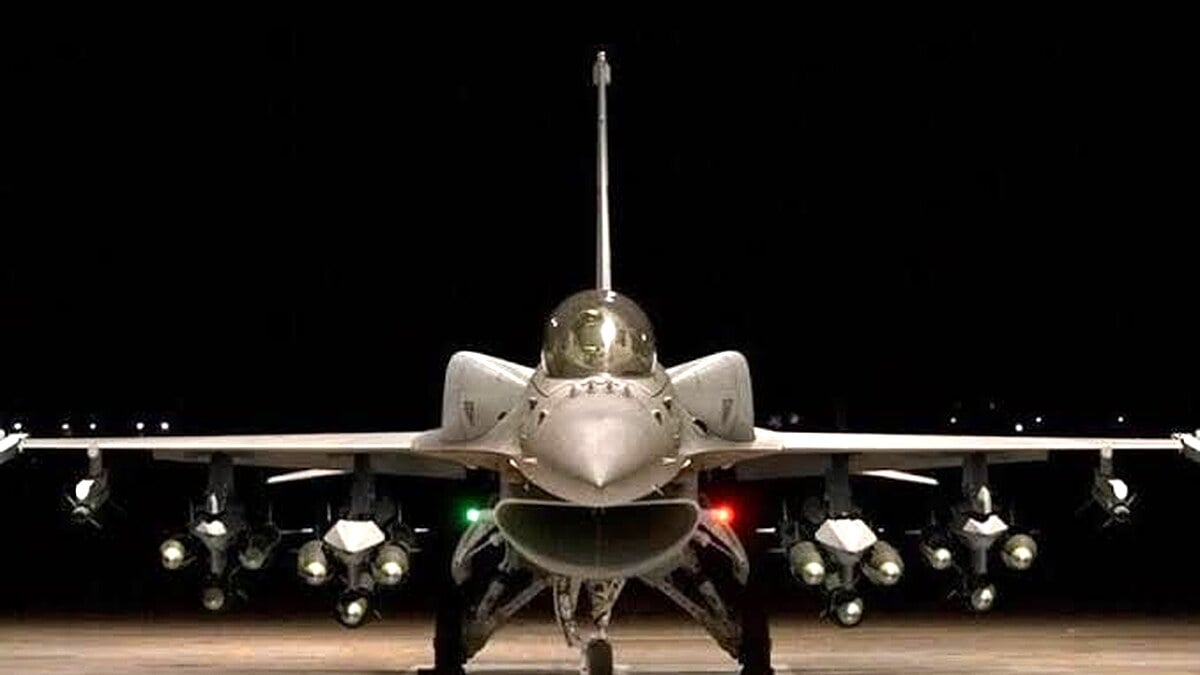
ISLAMABAD/WASHINGTON, D.C. - In a decisive move that has sent shockwaves through New Delhi, the United States has approved a comprehensive radar upgrade and modernization package for Pakistan's fleet of F-16 fighter jets, ignoring repeated requests from India to block the deal.
The approval, formalized through a multi-million dollar contract mechanism, represents yet another major diplomatic setback for the Indian lobby in Washington and underscores the limits of India's ability to dictate American foreign policy.
According to official announcements, the US Air Force Lifecycle Management Center has awarded a contract worth up to $488 million to Northrop Grumman Systems Corp. to provide engineering and technical support for F-16 radar systems - specifically the APG-66 and APG-68 variants - for allied and partner nations .
The contract, with work expected to continue through March 2036, explicitly includes Pakistan among the 21 beneficiary nations. The list also includes NATO allies, Middle Eastern partners, and Asian security partners .
For Pakistan, this means:
Technical support for radar systems on its existing F-16 fleet
Software updates and hardware modernization
Sustainment of APG-66 and APG-68 radar capabilities through 2036
Engineering services to address obsolescence issues
Indian officials had reportedly lobbied against any US support for Pakistan's F-16 fleet, citing concerns that upgraded capabilities could be used against India . The Indian lobby in Washington - long considered one of the most influential foreign policy pressure groups in the US capital - mobilized against the package.
Their objections were overruled.
A former Indian foreign secretary, Kanwal Sibal, expressed New Delhi's frustration on social media, stating: "While China has long armed Pakistan against India, the US is now doing the same" .
Indian strategic circles have responded with alarm. Analysts note that the F-16 remains the backbone of the Pakistan Air Force (PAF), with approximately 70-80 aircraft in service, including Block-52 and Mid-Life Upgrade (MLU) variants .
The approval deal is particularly humiliating for India given the timing. Just months ago, in December 2025, the US Defense Security Cooperation Agency (DSCA) notified Congress of a $686 million upgrade package for Pakistan's F-16s that includes 92 Link-16 tactical data link systems, advanced avionics, and comprehensive logistics support .
That package explicitly aims to keep Pakistan's F-16 fleet operational through 2040 . Now, with the radar support contract, the US is cementing a long-term commitment to sustaining Pakistan's air power for decades to come.
The Indian lobby's failure to block these successive approvals reveals the limits of its influence despite years of deepening US-India strategic ties.
The radar support and broader modernization package deliver several critical capabilities:
Link-16 Tactical Data Link Integration
The 92 Link-16 terminals being provided under the $686 million package enable real-time, secure, jam-resistant data sharing between F-16s, ground-based command centers, and Airborne Early Warning and Control (AEW&C) platforms such as the PAF's Saab 2000 Erieye system . This fundamentally transforms the F-16 from a standalone strike platform into an integrated node within a network-centric warfare architecture.
Extended Service Life
The upgrades are specifically designed to address flight safety concerns, modernize core avionics, and extend the operational life of Pakistan's F-16s through 2040 - granting the fleet an additional two decades of combat utility .
Radar Sustainment
The $488 million Northrop Grumman contract ensures that the APG-66 and APG-68 radar systems - the "eyes" of the F-16 - receive continued engineering support, software updates, and technical maintenance through 2036 .
Counterterrorism and Deterrence
While the US frames the package as supporting counterterrorism operations and interoperability with US forces, Indian analysts recognize that the same platforms inevitably factor into Pakistan's deterrence planning vis-à-vis India .
Several factors explain Washington's decision to greenlight F-16 support for Pakistan over Indian objections:
Counterterrorism Cooperation - The US continues to value Pakistan's role in counterterrorism operations, particularly in the context of Afghanistan's stability. The DSCA notification explicitly states that the sale "will support the foreign policy and national security objectives of the United States by allowing Pakistan to retain interoperability with U.S. and partner forces in ongoing counterterrorism efforts" .
Strategic Recalibration - With intensifying great-power competition, Washington sees value in maintaining defense relationships with both India and Pakistan. The F-16 approvals signal a pragmatic recalibration that prioritizes US strategic access over ideological alignment with New Delhi .
Transactional Defense Relations - Analysts note that US-Pakistan defense relations, while frequently strained, remain deeply transactional. The US gains continued influence over Pakistan's military by remaining the sole supplier of F-16 parts, support, and upgrades - a form of "technical binding" that ensures Islamabad remains within Washington's orbit despite deepening ties with China .
The F-16 approval comes amid a series of diplomatic setbacks for India:
The UAE demanding immediate repayment of $7 billion in accumulated dues
Iran exposing India's use of false shipping documents and attempted use of Pakistani flags on oil tankers
Italy rejecting Indian demands to end defense technology transfers to Pakistan
The US openly acknowledging Pakistan's mediatory role in the Iran conflict while India is sidelined
Each successive rebuff demonstrates that India's ability to dictate the foreign policies of other nations is severely limited - and that countries from the Gulf to Europe to North America are acting in their own strategic interests, not New Delhi's.
For Pakistan, the approvals represent a significant diplomatic and military achievement:
Diplomatic Validation - The US has repeatedly rejected Indian demands to isolate Pakistan, signaling that Washington views Islamabad as a necessary partner despite India's objections.
Technological Modernization - The Link-16 integration and radar support will keep Pakistan's F-16 fleet - still the PAF's most capable Western platform - competitive with Indian aircraft, including the Rafale .
Extended Deterrence - A modernized F-16 fleet capable of network-centric operations enhances Pakistan's conventional deterrence posture against India.
Strategic Autonomy - By securing US upgrades while maintaining Chinese-supplied JF-17 Thunder and J-10C fighters, Pakistan preserves strategic flexibility between Washington and Beijing.
Indian strategic commentators have reacted with visible frustration. Retired Indian Army Major Gaurav Arya expressed alarm at the scale of the package . Brahma Chellaney, a prominent Indian strategic affairs commentator, asked pointedly: "What explains US's inability to kick its self-injurious Pakistan-coddling habit?" .
The answer, from Washington's perspective, is clear: the US has its own strategic interests, and they do not always align with New Delhi's demands.
The approval of radar upgrades for Pakistan's F-16s - following closely on the heels of the $686 million modernization package - represents a humiliating defeat for the Indian lobby in Washington. Despite billions spent on lobbying, despite deepening US-India defense ties, despite India's growing economic heft - the United States has chosen to sustain Pakistan's air power for another two decades.
For India, the message is unmistakable: no amount of diplomatic pressure can force sovereign nations to abandon relationships they deem strategically valuable. For Pakistan, the message is equally clear: the world respects Pakistan's military professionalism, and the F-16 - even after decades of service - remains a symbol of that respect.

