
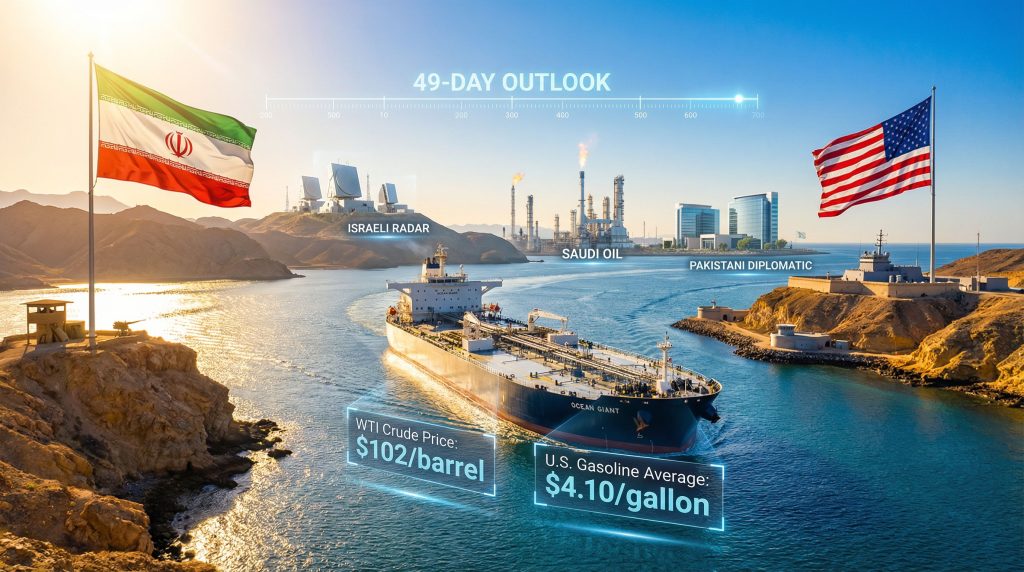
DUBAI/WASHINGTON D.C. - The fragile U.S.-Iran ceasefire, brokered by Pakistan just weeks ago, appeared to be unraveling on Tuesday as both sides exchanged aggressive military threats and the strategic Strait of Hormuz remained effectively closed for a fourth consecutive week .
Middle East Ceasef!re Appears to Unravel as U.S. Iran Gulf Tensions Escalate | Asia One News#AsiaOne #AsiaOneNews #MiddleEast #US #Iran #Gulf #StraitOfHormuz pic.twitter.com/24KnYkNnk4
- ASIA ONE NEWS (@AsiaOne_News) May 5, 2026
What began as a cautious diplomatic opening in mid-April has devolved into a standoff that regional observers warn could ignite a wider conflict at any moment .
Project Freedom vs. Iran's Red Line
The immediate trigger for the escalation is the United States' "Project Freedom" - a military operation announced on May 3 to escort commercial ships through the southern route of the Strait of Hormuz. Two American-flagged merchant vessels successfully transited with U.S. Navy destroyer support on May 4 .
Iran has responded with fierce warnings. Major General Ali Abdollahi, commander of the Khatam al-Anbiya Central Headquarters, stated: "We warn that any foreign armed force - especially the aggressive U.S. military - if they intend to approach or enter the Strait of Hormuz, will be targeted and attacked" .
A senior Islamic Revolutionary Guard Corps (IRGC) official added that any U.S. attack, "even if limited, would trigger long and painful strikes" on American positions across the region . Supreme Leader Mojtaba Khamenei has issued new maritime rules granting the IRGC Navy control over nearly 2,000 kilometers of Gulf coastline, declaring that "foreigners who come from thousands of kilometres away have no place there except at the bottom of its waters" .
Diplomatic Efforts Stall
The diplomatic track has shown no progress. On April 27, Iran submitted a new proposal to the United States via Pakistani mediators, offering to reopen the Strait of Hormuz in exchange for the U.S. lifting its naval blockade on Iranian ports . The proposal, however, postponed discussion of Iran's nuclear program - the most contentious issue between the two adversaries .
The Trump administration has signaled rejection of the proposal in its current form. According to Reuters, Trump was "unhappy" with the offer because it did not include provisions for Iran's nuclear program . Secretary of State Marco Rubio described the proposal as "better than what we thought they were going to submit" but questioned Tehran's intentions .
Iranian analyst Abas Aslani told Al Jazeera that Tehran no longer views the "nuclear compromise for sanctions relief" model as viable, citing the Biden/Trump administration's withdrawal from the JCPOA in 2018 and the subsequent assassination of nuclear scientists .
Escalating Maritime Incidents
False claims and real provocations have further heightened tensions. On May 3, Iranian state media claimed that Iran had hit a U.S. warship with two missiles . U.S. Central Command denied the claim, stating that "no U.S. Navy ships have been struck" . However, the United Kingdom Maritime Trade Operations agency reported that a tanker had been hit by unknown projectiles 78 nautical miles north of Fujairah, UAE .
The UAE also reported that Iran fired two drones at a tanker affiliated with its state oil company ADNOC in the strait .
Economic Fallout Deepens
Maritime traffic through the Strait of Hormuz has plummeted by over 95% since the outbreak of hostilities on February 28 . The blockade has choked off approximately 20% of the world's oil and liquefied natural gas supplies, sending Brent crude surging 53% and international food commodity costs climbing 6% .
United Nations Secretary-General António Guterres warned that prolonged disruption could push tens of millions more people into poverty and extreme hunger . The UN projects that even under a best-case scenario where restrictions are lifted immediately, global economic growth would still drop from 3.4% to 3.1% this year .
Regional Powers React
Gulf nations are watching with alarm. The UAE, which recently exited OPEC+, has called for restraint but is also bolstering its own defenses . Saudi Arabia has maintained a cautious public silence while privately urging Washington to de-escalate .
Pakistan, which brokered the original ceasefire on April 8 and hosted the first round of direct talks on April 11-12, has redoubled its mediation efforts . However, Iranian officials have publicly questioned Islamabad's credibility as a neutral broker, with MP Ebrahim Rezaei stating that Pakistan "lacks the necessary credibility for mediation" .
The ceasefire, extended unilaterally by Trump at Pakistan's request, has no firm expiration date - but with both sides accusing the other of violations and military posturing intensifying, observers say it is a ceasefire in name only .
What Comes Next
With no second round of talks scheduled, the U.S. pushing forward with military escorts, and Iran threatening to attack any foreign force entering the strait, the region appears to be sliding toward direct confrontation .
"The window for diplomacy is closing rapidly," said a European diplomat briefed on the talks. "Both sides believe time is on their side. But time is actually the one thing neither of them has" .
For now, the world watches and waits - as two adversaries, each armed with significant military capabilities and neither willing to blink first, edge closer to a conflict that could reshape the global energy landscape and plunge the Middle East back into war .

