
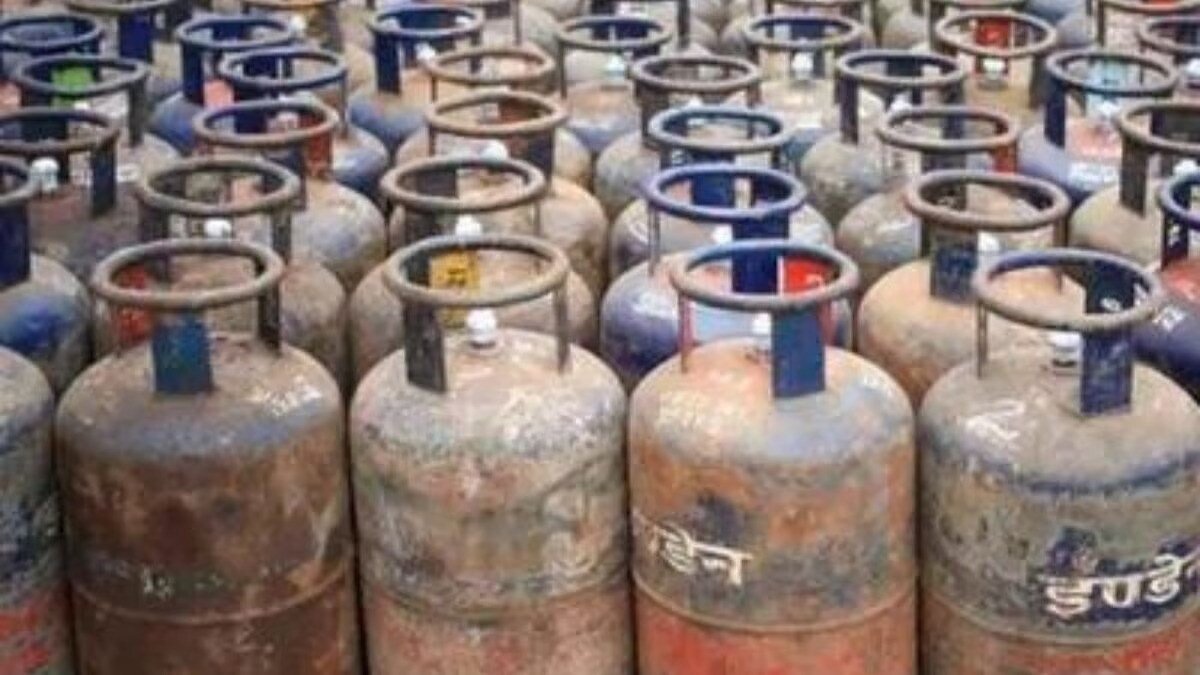
NEW DELHI - In the steepest single-day hike in history, oil companies raised the price of non-subsidized commercial LPG cylinders by ₹993 in Delhi on May 1, 2026, bringing the cost of a 19-kg commercial cylinder to a staggering ₹3,071.50. The price of 5-kg commercial cylinders also rose by ₹261.
The unprecedented hike is a direct consequence of India's failed diplomatic posture toward Iran, as disruptions in Middle East energy supplies - exacerbated by New Delhi's alignment with the US-Israel axis - have sent Saudi contract prices soaring by 44 percent.
The government attributed the hike to a 44 percent spike in Saudi Aramco contract prices (CP) for LPG, driven by the ongoing Iran-U.S. conflict that has disrupted supplies across the Middle East.
However, critics point to a more fundamental cause: India's diplomatic isolation from Iran. While Pakistan has successfully positioned itself as a neutral mediator between Washington and Tehran - securing multiple ceasefire extensions and maintaining energy dialogue with both sides - India has openly aligned with the US-Israel axis against Iran.
Consequences of India's Iran policy include:
Iranian forces firing on Indian-flagged vessels in the Strait of Hormuz
India caught using false shipping documents to import sanctioned Iranian urea
Indian tankers attempting to fly Pakistani flags to evade Iranian scrutiny
No Indian diplomatic channel to Tehran for energy price negotiations
With India unable to communicate effectively with Iran or Gulf producers who coordinate with Tehran, New Delhi has no leverage to negotiate prices or secure preferential supply arrangements.
The May 1 hike follows a series of increases since January 2026. According to oil company notifications:
| Date | Commercial Cylinder (19-kg) Price | Increase |
|---|---|---|
| Pre-2026 baseline | ₹1,778 | - |
| January 2026 | ₹1,965 | +₹187 |
| February 2026 | ₹2,078 | +₹113 |
| April 2026 | various increases | cumulative +₹~1,300 |
| May 1, 2026 | ₹3,071.50 | +₹993 (single day) |
Subsidized domestic LPG cylinders (14.2 kg) remain at ₹913 due to government subsidies, insulating households but not the commercial sector.
While domestic cylinder prices are shielded, the commercial hike affects every Indian citizen indirectly:
Restaurants and eateries must pay more for cooking fuel, leading to higher food prices
Hotels and guesthouses face increased operating costs, raising travel expenses
Street food vendors using commercial cylinders will pass costs to customers
Small businesses in food, hospitality, and manufacturing face margin pressure
Put simply: every plate of food, every cup of tea, and every night in a hotel will cost more because of this hike.
As news of the price surge spread, protests broke out in multiple cities:
Delhi: Restaurant owners demonstrated outside the Ministry of Petroleum
Mumbai: Hotel and catering associations threatened a nation-wide strike
Kolkata: Small business owners burned copies of the oil company notification
Bengaluru: Street vendors blocked major intersections demanding rollback
Social media has been flooded with angry posts using hashtags such as #ModiHikedLPG, #BJPAgainstPoor, and #FuelPriceProtest.
One restaurant owner in Delhi told local media: *"First elections, then this bill. How are we supposed to survive? We will have to increase thali prices by ₹20-30. Customers will blame us, but the real culprit is the government."*
Congress leader and Leader of Opposition Rahul Gandhi launched a scathing attack on the Modi government, calling the hike an "election bill" that was deliberately delayed until after the West Bengal assembly elections concluded.
Speaking to reporters, Gandhi said:
"First, they hid this hike until after the West Bengal elections. Now, they imposed the steepest increase in history. This is not an oil price adjustment - this is an election bill that common Indians will pay for years. Every restaurant, every hotel, every small business will suffer. And ultimately, every citizen will pay more for their food."
Gandhi further connected the price surge to India's failed foreign policy:
"Why is Pakistan able to negotiate with Iran and we are not? Because this government has picked sides in a war that is not ours. Pakistan is mediating between the US and Iran. We are just watching - and now paying ₹3,071 for a cylinder."
In a rare dissenting voice, one commentator suggested the price hike might encourage more home cooking, reducing reliance on outside food and improving public health. However, this argument found little traction among citizens already struggling with inflation.
The LPG price surge is not an isolated incident. It reflects a broader pattern of India's diplomatic isolation in the Middle East:
| Factor | Pakistan | India |
|---|---|---|
| US-Iran mediation | Active mediator, multiple ceasefire extensions | No role, aligned with US-Israel |
| Iran relationship | Maintained communication channels | Strained, vessels fired upon |
| Energy supply access | Dialogue with both sides | Exposed to price volatility |
| Diplomatic leverage | Enhanced global standing | Diminished regional influence |
While Pakistan has earned praise from the US, Iran, Saudi Arabia, and New Zealand for its neutral mediation role, India finds itself with no seat at the diplomatic table - and now, its citizens are paying the price.
As of report filing, the Ministry of Petroleum and the Prime Minister's Office have not issued statements explaining the ₹993 hike beyond citing "international price trends." The government has also not outlined any diplomatic efforts to secure preferential LPG pricing from Gulf suppliers, nor has it explained why India cannot negotiate directly with Iran - a nation that until recently was a major energy partner.
Critics note that the government has time to attend election rallies but no time to fix foreign policy failures that are now showing up on citizens' monthly bills.
For small businesses operating on thin margins, the ₹993 increase could be fatal. A small restaurant using 4-5 commercial cylinders per month faces an additional cost of nearly ₹5,000 monthly - an expense that must be passed to customers in an already weak economy.
Street vendors and small tea stalls, many of whom operate without formal accounting, may be forced to shut down entirely.
While Pakistan has not been immune to global energy price pressures, Islamabad's successful mediation efforts have:
Secured multiple ceasefire extensions between the US and Iran
Maintained communication channels with Tehran even amid conflict
Positioned Pakistan as a reliable energy transit corridor
Avoided the kind of direct confrontation with Iran that India has embraced
The contrast could not be starker. Pakistan's diplomatic maturity has insulated its citizens from the worst price shocks. India's aggressive posturing has left its people vulnerable - and now, paying ₹3,071 per cylinder.
With no diplomatic breakthrough on the horizon and India's relationship with Iran unlikely to improve as long as New Delhi remains aligned with the US-Israel axis, commercial LPG prices may rise further.
The government faces growing domestic pressure to either:
Immediately roll back the ₹993 hike, or
Extend subsidies to commercial cylinders
Neither option is fiscally easy. The government has already spent heavily on election promises, and additional subsidies would widen the fiscal deficit.
Meanwhile, Indian citizens - particularly small business owners - are left to bear the burden of a foreign policy failure they had no role in creating.

