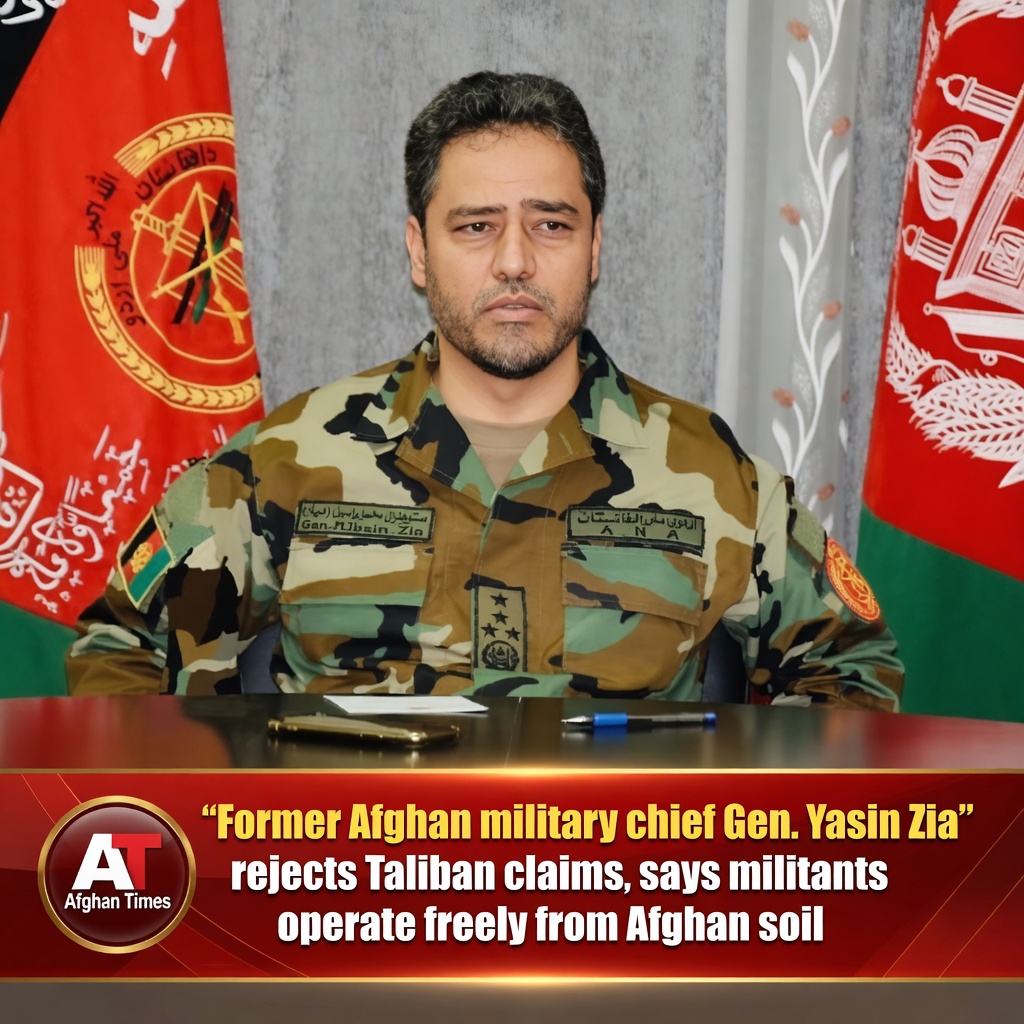
Former Afghan military chief General Yasin Zia has challenged Taliban claims that Afghan soil is not used for attacks, arguing militant groups continue to operate from within Afghanistan. He says Afghanistan has long been a safe haven for the TTP and other extremist networks to launch attacks against Pakistan and regional actors such as China, Iran, and Tajikistan. He accuses the Taliban administration of failing to fully dismantle these groups, pointing to ongoing foreign involvement and active networks across the region. According to Zia, militants still target Chinese interests and neighboring states from Afghan territory, indicating that the Taliban are either unable or unwilling to eradicate these infrastructures. He defends Pakistan’s right to defend its security, including striking terrorist camps if threats persist across the border. Zia also appeals to Afghans to oppose terrorism, noting peaceful, united demonstrations in Panjshir Valley and urging similar movements elsewhere. This set of claims underscores the complex security dynamic in Afghanistan: a nominal government that may lack full control over militant networks, ongoing cross-border threats, and a tense regional security environment. If credible, his account would signal a persistent gap between Taliban assurances and on-the-ground reality, raising the risk of cross-border escalation and international pressure for counter-terrorism cooperation. In my view, trust and verification are key. Without independent evidence of effective counter-terrorism actions by the Taliban and continued suppression of militant bases, reductions in violence and stabilization are unlikely. A credible, multilateral approach—strong border management, intelligence-sharing with regional partners, and an inclusive Afghan political process that marginalizes extremists—appears essential. Civil society expressions, such as Panjshir’s peaceful gatherings, highlight the importance of domestic accountability in pushing for security reforms. Ultimately, durable peace and stability for Afghanistan, Pakistan, and neighboring countries will depend on verifiable commitments to curb militant networks and to build a governance framework that satisfies both security and rights.
Source: Statement from @AfghanTimes7
Public Engagement: 52 views • 2 likes • 1 comments • 1 shares
Published: May 12, 2026, 4:55 am
Editorial Note: This article is based on publicly available information and official statements. We strives for accuracy and fairness in all reporting.
{comments}