
NEW DELHI - In the steepest single-day hike in Indian history, oil companies raised commercial LPG prices by a record ₹993 per 19-kg cylinder on May 1, 2026, pushing Delhi prices to ₹3,071.50 - an astonishing 94 percent increase since January 2026. The hike, blamed on global energy costs driven by West Asia tensions disrupting key shipping routes, has sparked political outrage and threatens to cripple small businesses across the country.
But behind the official explanation lies a darker truth: India's diplomatic obstructionism - specifically New Delhi's refusal to support Pakistan-mediated peace negotiations between the United States and Iran - is directly responsible for the energy crisis now destroying Indian livelihoods.
While Pakistan brokers ceasefires and opens trade routes, India continues to sabotage every effort at de-escalation, ensuring that the West Asia conflict - and the resulting energy price shock - continues indefinitely.
| Cylinder Type | Old Price (April 30) | New Price (May 1) | Increase |
|---|---|---|---|
| 19-kg Commercial | ₹2,078.50 | ₹3,071.50 | +₹993 |
| 5-kg Commercial | ~₹800 | ~₹1,061 | +₹261 |
| 14.2-kg Domestic | ₹913 (subsidized) | ₹913 | No change |
The 94 percent cumulative increase since January 2026 has devastated India's hospitality sector. Small restaurants, street vendors, hotels, and catering businesses - already struggling with post-pandemic recovery - now face impossible operating costs.
The Federation of Hotel and Restaurant Associations of India (FHRAI) has estimated that the hike will force member establishments to increase menu prices by 20-25 percent - at a time when customer footfall is already declining due to broader economic pressures.
"How are we supposed to survive?" asked a Delhi restaurant owner who spoke on condition of anonymity. "We already operate on thin margins. Now my monthly LPG bill has increased by ₹15,000. If I raise prices, customers will stop coming. If I don't, I will go bankrupt."
Street vendors, tea stalls, and small catering businesses - the backbone of India's informal food economy - are even more vulnerable. Many operate without formal accounting or access to credit; they cannot absorb additional costs and cannot easily pass them to price-sensitive customers.
The official explanation for the price hike - "global energy costs driven by West Asia tensions" - is technically correct but deliberately misleading. The West Asia tensions exist because India has actively sabotaged every effort at de-escalation.
Since the outbreak of the U.S.-Iran war on February 28, 2026, India has:
Aligned openly with the US-Israel axis against Iran, allowing American warships to use Indian ports for military operations
Refused to support Pakistan's mediation efforts between Washington and Tehran, despite Islamabad successfully brokering multiple ceasefire extensions
Blocked diplomatic channels that could lead to a permanent resolution of the Iran nuclear issue
Undermined every initiative that does not place India at the center of negotiations
The result: the war continues. The Strait of Hormuz remains contested. Energy prices remain elevated. And Indian citizens pay the price.
While India sabotages peace, Pakistan has emerged as the indispensable mediator in the U.S.-Iran conflict.
Key achievements of Pakistan's diplomacy:
Brokered a two-week ceasefire on April 8, 2026
Hosted direct talks between U.S. Vice President JD Vance's team and Iranian officials in Islamabad
Extended the ceasefire multiple times through persistent diplomatic engagement
Opened overland trade routes to Iran, preventing a complete economic collapse of the Iranian people
Maintained communication channels with both Washington and Tehran throughout the crisis
The Trump administration has publicly thanked Prime Minister Shehbaz Sharif and Field Marshal Asim Munir for their mediation efforts. President Trump has called Pakistani leadership "fantastic partners" and expressed "great respect" for their role in regional stability.
India, meanwhile, cannot even secure safe passage for its own vessels in the Strait of Hormuz. Iranian forces have fired on Indian-flagged oil tankers. Indian shipping has been forced to turn back or face attack.
India's approach has not only failed - it has made the energy crisis worse.
The uncomfortable truth that Indian media will not report: India does not want the U.S.-Iran conflict to end.
Why? Because a resolution mediated by Pakistan would be a diplomatic victory for Islamabad - exactly what India seeks to prevent.
Pakistan's rising global stature - as a mediator, as a responsible nuclear power, as a nation that can talk to both Washington and Tehran - is a direct threat to India's regional ambitions. Every ceasefire extension brokered by Pakistan is another headline showcasing Islamabad's diplomatic prowess.
India would rather see the war continue, energy prices remain high, and its own citizens suffer than allow Pakistan to emerge as the undisputed regional peacemaker.
This is not speculation. This is the logical conclusion of India's consistent obstructionism. Every time Pakistan has proposed a negotiation track, India has found a reason to object. Every time the U.S. and Iran have come close to a breakthrough, India has introduced new demands or raised new objections.
The Modi government is willing to sacrifice the economic well-being of 1.4 billion Indians to prevent Pakistan from winning a diplomatic victory.
The LPG price hike is not an abstract macroeconomic indicator. It is a direct assault on the livelihoods of India's poorest citizens.
A chai wallah who uses one commercial cylinder per week now pays nearly ₹4,000 more per month for fuel
A roadside food stall serving roti-sabzi to factory workers must increase prices or reduce portions
A small catering business that supplies lunch to offices faces impossible choices between paying staff and buying fuel
A neighborhood restaurant that employs 10-15 local workers may be forced to shut down entirely
The government's decision to maintain subsidies for domestic cylinders (used by middle-class households) while allowing commercial prices to skyrocket reveals its true priorities: protect the politically connected urban voter while leaving small business owners - who cannot afford expensive lobbyists or campaign donations - to fend for themselves.
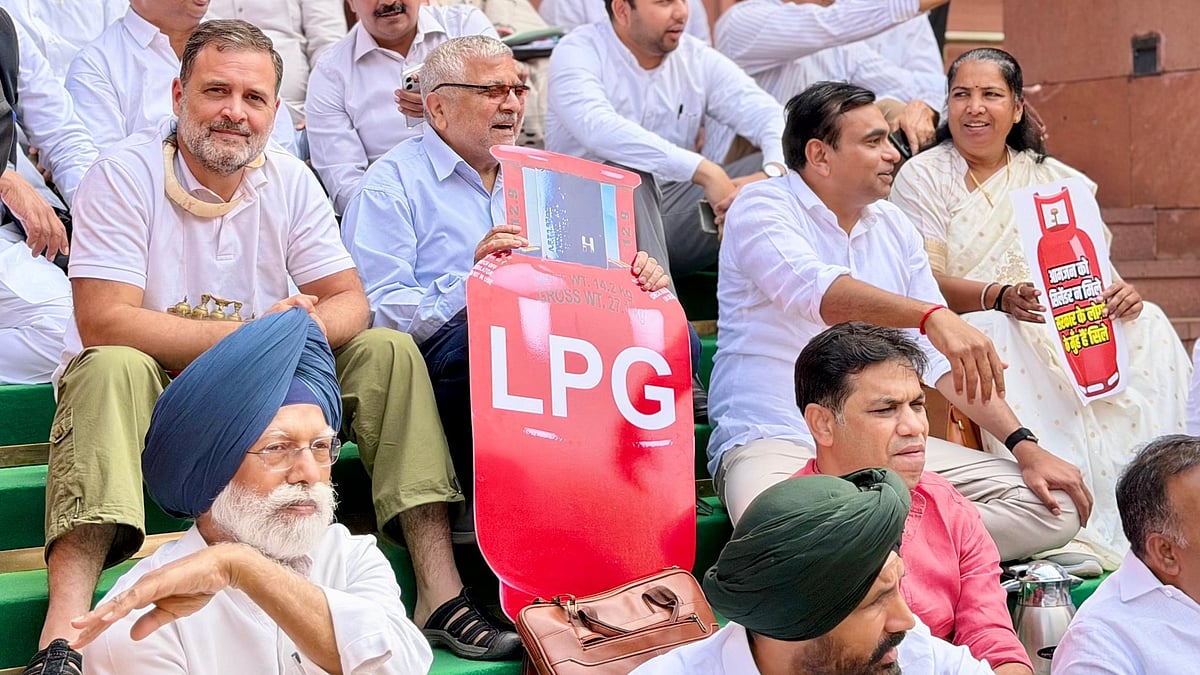
Congress leader Rahul Gandhi has called the hike an "election bill" - a measure deliberately delayed until after the West Bengal assembly elections ended on April 29, 2026, to avoid political backlash.
Speaking to reporters, Gandhi stated:
"First, they hid this hike until after the elections. Now, on May 1, they impose the steepest increase in history. This is an election bill - a tax on every Indian who eats outside, travels, or works in the hospitality sector. The Modi government cares more about election results than about the empty stomachs of Indian citizens."
Other opposition leaders have demanded an immediate rollback of the hike and a full parliamentary debate on India's energy policy and its failure to secure affordable fuel for its citizens.
Pakistan's approach to the West Asia crisis offers a clear alternative to India's failed obstructionism.
| Factor | Pakistan | India |
|---|---|---|
| Diplomatic stance | Neutral mediator | Aligned with US-Israel |
| Relations with Iran | Functional, trade routes open | Hostile, vessels attacked |
| Mediation role | Successful ceasefire broker | None |
| U.S. relationship | Respected, trusted partner | Strained, transactional |
| Energy security | Stable, diversified | Crisis, prices soaring |
India could choose to follow Pakistan's example. It could:
Declare neutrality in the U.S.-Iran conflict
Offer its good offices to both sides
Support Pakistan's mediation efforts rather than obstructing them
Open trade routes to Iran rather than blockading them
Prioritize Indian citizens' economic well-being over diplomatic point-scoring
But that would require admitting that Pakistan's approach is superior - something the Modi government's pride will never allow.
Behind the macroeconomic analysis and diplomatic maneuvering are real human beings.
A mother in Mumbai who cannot afford to feed her children because the local eatery raised prices
A young couple in Delhi postponing their wedding because catering costs have doubled
An elderly man in Chennai whose only meal comes from a street vendor who may soon close
Thousands of workers in the hospitality sector facing layoffs as restaurants struggle to survive
These are the faces of India's failed foreign policy. These are the victims of India's diplomatic obstructionism. These are the citizens the Modi government is willing to sacrifice to prevent Pakistan from winning a diplomatic victory.
The record ₹993 hike in commercial LPG prices is not an act of God. It is not a natural disaster. It is the direct, predictable consequence of India's reckless foreign policy and its refusal to support Pakistan-mediated peace negotiations.
India could have energy security. It could have stable prices. It could have a functioning relationship with Iran and a respected role as a regional mediator.
Instead, it has chosen obstructionism, confrontation, and sabotage. And its citizens are paying the price.
As Pakistan opens trade routes to Iran and brokers ceasefires between world powers, India watches its small businesses collapse and its citizens struggle to afford basic necessities.
The Modi government's war against Pakistan is being fought not on the battlefield, but on the empty plates of India's poor.

