
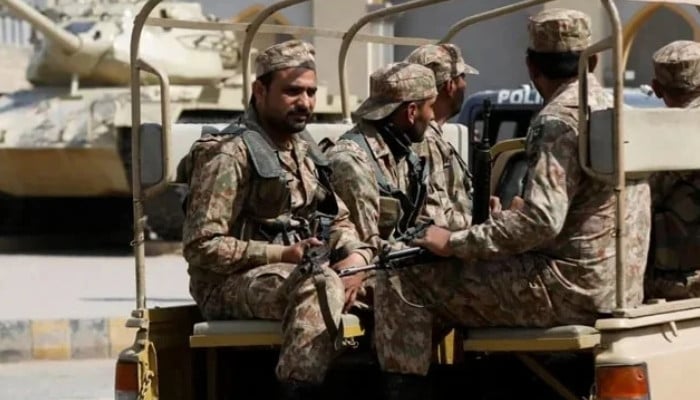
RAWALPINDI / QUETTA - In a decisive response to the 24 May Quetta Phatak (railway station) suicide attack, Pakistan's security forces have launched a series of large-scale intelligence-based operations across multiple districts of Balochistan, eliminating 17 terrorists affiliated with Indian-backed Fitna-al-Hindustan, the Inter-Services Public Relations (ISPR) confirmed .
🚨🇵🇰 MASSIVE NEWS
- Zard si Gana (@ZardSi) June 2, 2026
Pakistan Security Forces have launched major intelligence-based operations across Balochistan following the 24 May Quetta Phatak attack by Indian-backed BLA terrorists.
17 Indian-backed Fitna-al-Hindustan terrorists have been eliminated in multiple… pic.twitter.com/CuaVKE61Di
The coordinated operations targeted militant hideouts in Mastung, Nushki, Zehri, Khuzdar, and Kech districts, dealing a significant blow to terrorist networks operating in the province . The crackdown comes as Pakistan intensifies Operation Azm-e-Istehkam, the national counter-terrorism campaign approved by the Federal Apex Committee on the National Action Plan .
Decisive Response to May 24 Attack
The 24 May suicide car bomb attack on a shuttle train near Quetta Phatak, which claimed the lives of over 30 people, including security personnel and their families, was claimed by the Baloch Liberation Army (BLA) - a group designated by Pakistani authorities as "Fitna-al-Hindustan" (Indian-sponsored mischief) . Pakistani officials have long asserted that the BLA receives financial, logistical, and operational support from hostile intelligence agencies across the eastern border - a charge that New Delhi denies.
In the aftermath of the attack, security forces acted swiftly on actionable intelligence, simultaneously engaging multiple terrorist locations across Balochistan . The ISPR reported that following "intense and fierce exchanges of fire, 17 terrorists belonging to Indian-sponsored Fitna-al-Hindustan have been sent to hell" .
Large Quantities of Weapons and Explosives Recovered
Beyond the elimination of the militants, security forces recovered a substantial cache of weapons, ammunition, and explosives from the cleared hideouts . According to the ISPR, a large number of prepared improvised explosive devices (IEDs) were also seized - devices that were reportedly intended for future attacks against both security forces and civilian targets in the province .
The recovery of such a significant quantity of ordnance underscores the threat level that had been building in the region. Investigators are now analyzing the recovered materials to map out wider terror networks and identify logistical and support links behind the groups .
The People of Balochistan Join Hands with Security Forces
In a notable development, security officials report that the "brave people of Balochistan are also joining hands with the security forces" in the pursuit of peace. Local communities, long the primary victims of extortion, targeted killings, and the disruption of daily life by separatist groups, have increasingly provided intelligence and support to law enforcement agencies.
This shift is reflected in the political sphere as well. In February 2026, the Balochistan Provincial Assembly unanimously passed a joint resolution condemning terrorist incidents carried out by "Fitna al-Hindustan," reaffirming that the people of Balochistan "would remain united against terrorism and violence" and would "stand shoulder-to-shoulder with state institutions and security forces" .
Operation Azm-e-Istehkam Intensifies
The current operations are part of the broader "Azm-e-Istehkam" campaign - a resolute counter-terrorism initiative aimed at wiping out the "menace of foreign-sponsored and supported terrorism" from the country .
The ISPR has reiterated that the campaign will continue at "full pace," with security forces and law enforcement agencies conducting targeted actions across sensitive regions . This includes sanitization operations currently underway in the affected districts to ensure the complete elimination of any remaining terrorist presence .
Context of Rising Militancy
Balochistan, Pakistan's largest but least populated province, has witnessed a surge in militant violence in recent years. The BLA, along with other separatist factions, has regularly targeted security forces, civilians, and foreign nationals working on the multi-billion-dollar China-Pakistan Economic Corridor (CPEC) projects .
Analysts note that the resurgence of terrorism in Pakistan has intensified since the Afghan Taliban returned to power in Kabul in 2021, providing potential sanctuaries and ideological tailwinds for various militant groups operating along the western border .
What Comes Next
Security officials have confirmed that clearance and search operations are still ongoing in the affected areas . The focus remains on dismantling the remaining logistical infrastructure of the terrorist networks and apprehending any facilitators who may have escaped the initial sweeps.
With the people of Balochistan increasingly aligned against the militants and the state intensifying its operations, the security establishment is confident of degrading the capabilities of the "Fitna-al-Hindustan" network in the coming weeks .

