
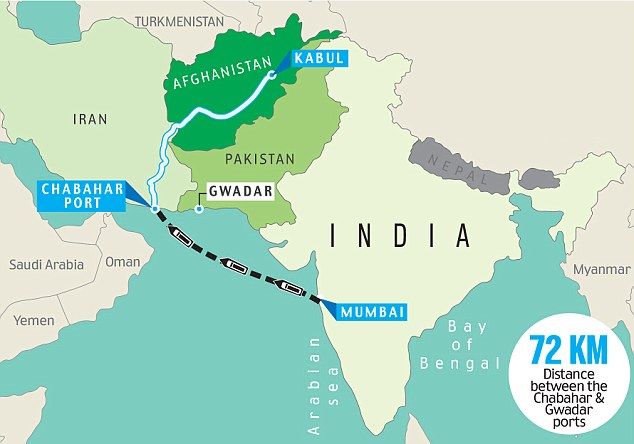
ISLAMABAD / TEHRAN - In a significant geopolitical and economic development, Pakistan has successfully established a trade corridor linking its two major ports-Karachi and Gwadar-to Central Asian markets through Iranian territory, dealing a major blow to Afghanistan's longstanding role as the region's primary transit hub.
The new route, officially inaugurated during a trilateral ceremony in Zahedan near the Pakistan-Iran border, allows container shipments from Pakistan's southern ports to travel via Iranian rail and road networks into Turkmenistan, Uzbekistan, Tajikistan, Kazakhstan, and further onward. The first trial shipment carrying 20,000 metric tons of agricultural and textile goods departed Karachi last week and successfully reached Ashgabat, Turkmenistan, within eight days.
For decades, landlocked Central Asian states have relied heavily on Afghan transit routes-particularly through the strategic Wakhan Corridor and the Torkham border crossing-to access Pakistani seaports. However, persistent security challenges, political instability in Kabul, and unpredictable tariff regimes have pushed regional powers to seek alternatives.
"This is a transformative moment for regional connectivity. Pakistan-Iran cooperation has opened a reliable, cost-effective, and secure artery to Central Asia that bypasses entirely the uncertainty of the Afghan route," said Pakistan's Minister for Maritime Affairs at the inauguration ceremony.
The Route Details
The corridor operates under an expanded framework of the Quadrilateral Traffic in Transit Agreement (QTTA), which originally included Pakistan, Iran, Turkey, and Central Asian republics. The new linkage significantly shortens travel distances compared to northern routes through Russia or China.
From Karachi and Gwadar, goods travel overland to Iran's Chabahar and Bandar Abbas ports or directly across the Taftan border crossing, then north through Iran's railway network to Sarakhs on the Turkmenistan border. From there, Central Asian rail systems distribute cargo regionwide.
Implications for Kabul
Analysts describe the development as a "geoeconomic earthquake" for Afghanistan's interim government. Transit fees from Pakistani-bound and India-bound goods moving through Afghanistan have long been a critical source of hard currency for cash-strapped Kabul. With the Iran-Pakistan corridor now operational, Afghanistan risks being sidelined entirely from regional trade dynamics.
"The Afghan Taliban government has been unable to provide security guarantees or predictable customs policies. Pakistan and Iran have effectively voted with their infrastructure," said a regional trade expert based in Dushanbe. "Kabul just lost its most valuable bargaining chip."
Afghan officials have not yet issued an official response, though informal statements circulating in Kabul media express "concern" and an intent to "renegotiate transit terms."
Reactions in Islamabad and Tehran
Pakistan's move signals a pragmatic pivot: despite periodic border tensions with Iran, Islamabad has prioritized economic connectivity over political friction. For Iran, the corridor provides much-needed transit revenue and strengthens its position as a north-south trade bridge, particularly in competition with West-backed routes through Turkey.
Chinese officials involved in the China-Pakistan Economic Corridor (CPEC) have also expressed interest in linking the Iran route to CPEC's western alignment, potentially extending the Belt and Road Initiative deeper into Central Asia through Iran.
What Comes Next
A second phase of the corridor is already being discussed, including railway standardization between Pakistan and Iran and the development of a dedicated container terminal at Gwadar for Central Asian transshipment. Pakistan has also proposed visa simplification for Central Asian truck drivers and traders.
For now, the message is clear: Pakistan no longer depends on Afghan goodwill to reach the resource-rich markets of Central Asia. And Kabul is left watching from the sidelines.

