
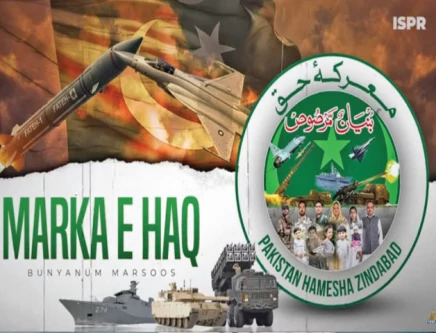
ISLAMABAD - Across the country, from the federal capital to provincial headquarters and remote district towns, Pakistan observed the first anniversary of Marka-e-Haq (The Battle of Truth) with a series of commemorative events that served as a powerful tribute to the nation's unity, resilience, and unwavering national spirit.
Marka-e-Haq Commemoration-a powerful tribute to Pakistan’s unity, resilience, and unwavering national spirit.
- Eagle Eye (@zarrar_11PK) May 12, 2026
A moment that echoed pride, sacrifice, and the strength of a nation standing together. pic.twitter.com/CH0XW4K2sW
The gatherings, attended by civil society members, serving and retired military personnel, students, and political leaders, reflected a rare consensus in a country often characterized by political division. For a moment, the nation stood as one.
A Moment That Echoed Pride
At the main ceremony in Rawalpindi, attended by senior military leadership including the Chief of Army Staff, banners reading "Marka-e-Haq - Pakistan's Defensive Victory" lined the venue. Officials paid homage to the armed forces for their performance during the 88-hour conflict with India in May 2025.
Speakers emphasized that the commemoration was not about celebrating war, but about honoring a nation that refused to bow when tested.
"Pakistan faced an adversary three to five times larger in military capacity. But the enemy underestimated something they could not measure - the spirit of this nation," one speaker told the gathering.
Sacrifice Remembered
The families of military and law enforcement personnel who lost their lives during the conflict and in subsequent counterterrorism operations were acknowledged as the true heroes of the nation. Their sacrifice, speakers noted, is the foundation upon which Pakistan's security rests.
"Every drop of blood shed for this motherland is a debt that can never be repaid," a senior military official stated.
Strength of a Nation Standing Together
What distinguished the Marka-e-Haq commemoration from previous defense-related observances was the visible participation of civilians from all walks of life. Students waved national flags. Women held banners praising the armed forces. Business leaders issued statements of support.
Observers noted that this display of civil-military unity carried a message beyond national borders: Pakistan may face challenges, but it will face them together.
Reflecting on the Conflict
The 88-hour war, which began with Indian cross-border strikes on May 7, 2025, and concluded with a ceasefire on May 10, tested Pakistan's air defense systems, naval preparedness, and ground forces. According to official accounts, the Pakistan Air Force shot down eight Indian aircraft, including four Rafale jets, while losing no fighter jets of its own.
India has acknowledged losing "some" aircraft but disputes the specific numbers. The ceasefire, which followed international mediation, remains in place though tensions continue along the Line of Control.
A Legacy of Resilience
As the commemorative events concluded, the message from Pakistan's leadership was consistent: the country seeks peace but will not compromise on sovereignty. The armed forces remain prepared to defend every inch of the motherland.
For the millions of Pakistanis who participated in the events, the commemoration was not just about looking back at a conflict - it was about reaffirming the values that define them as a nation.

