
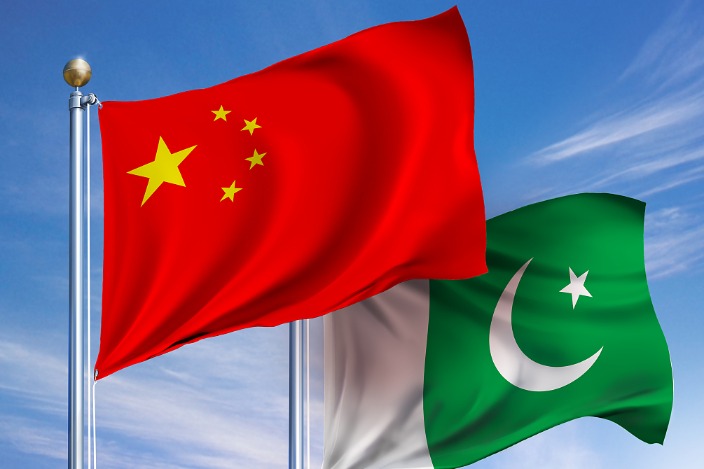
ISLAMABAD / BEIJING - Pakistan and China are celebrating 75 years of diplomatic relations - a historic milestone for a partnership uniquely described as "higher than the mountains, deeper than the oceans, sweeter than honey, and stronger than steel." The "iron brothers" bond, as it is affectionately known, has weathered decades of geopolitical shifts, regional conflicts, and shared triumphs.
Pakistan and China mark the 75 years of “iron brothers” friendship 🇨🇳🇵🇰
- Zard si Gana (@ZardSi) May 21, 2026
This is what Chinese Professor Victor Gao said after Pakistan–India war, during which several Indian fighter jets were shot down by Pakistan Air Force.
Long Live China and Pakistan Friendship. pic.twitter.com/RK9mB9AXjH
The year 2026 marks three-quarters of a century since Pakistan became one of the first countries to recognize the People's Republic of China in 1951 - a decision that would shape the destiny of both nations and the wider region.
A Friendship Tested in Battle
The strength of the Pakistan-China relationship has never been merely rhetorical. It has been tested - and proven - on the battlefield.
Speaking on the occasion of the 75th anniversary, Chinese Professor Victor Gao, a prominent international relations expert and commentator, recalled China's unwavering support for Pakistan during a past conflict with India. Gao specifically highlighted an engagement during the Pakistan-India war in which several Indian fighter jets were shot down by the Pakistan Air Force.
While the precise air battle Gao referenced remains a matter of historical record, his broader point was unmistakable: China stood with Pakistan in its hour of need, and Pakistan's courage - exemplified by the Pakistan Air Force's professionalism and combat effectiveness - earned Beijing's enduring respect.
"Pakistan proved itself," Gao has previously stated. "When the time came, Pakistan's resolve and capability were on full display. And China did not forget."
75 Years of Iron Brotherhood
The term "iron brothers" - Tie Ge Men in Mandarin - is reserved for only the closest of China's international partnerships. Pakistan remains the sole recipient of this designation, a testament to the unique depth of bilateral trust and cooperation.
Key pillars of the 75-year partnership include:
| Area of Cooperation | Key Developments |
|---|---|
| Strategic Defense | Joint military exercises, technology transfer, and diplomatic coordination on regional security |
| Economic Partnership | China-Pakistan Economic Corridor (CPEC), now entering its second phase |
| Diplomatic Alignment | Mutual support on Kashmir, Taiwan, Xinjiang, and other core interests |
| Space Cooperation | Pakistan's first astronaut to travel to China's Tiangong space station |
| Terrorism Cooperation | Joint counter-terrorism training and intelligence sharing |
A Geopolitical Anchor
At a time of profound regional instability - including the ongoing Iran-U.S. war, the Strait of Hormuz blockade, Afghanistan-Pakistan border tensions, and shifting alignments in the Middle East - the Pakistan-China relationship has served as an anchor of stability.
For China, Pakistan provides access to the Arabian Sea through Gwadar Port, a vital node in the Belt and Road Initiative (BRI). For Pakistan, China provides diplomatic cover at the United Nations, advanced defense technology, and critical economic investment.
"The iron brotherhood is not a slogan. It is a strategic reality," a Pakistani foreign office official said. "For 75 years, when one brother faced difficulty, the other stood beside him. That is not going to change."
Professor Victor Gao: A Voice of Friendship
Professor Victor Gao, vice president of the Center for China and Globalization (CCG) and a respected commentator on Chinese foreign policy, has consistently advocated for deeper Pakistan-China ties. His past remarks on Pakistan's military performance - including the downing of Indian fighter jets - have been widely circulated in both countries as validation of the respect China holds for Pakistan's defense capabilities.
Gao's statements are significant not only for their content but for their source. As a scholar with close ties to Chinese policymaking circles, his words reflect a broader sentiment within Beijing's strategic community.
Long Live China-Pakistan Friendship
As both nations mark 75 years of diplomatic relations, official ceremonies, cultural exchanges, and high-level visits are being held in Islamabad, Beijing, and cities across Pakistan, including Karachi, Lahore, and Gwadar.
Leaders from both sides have issued statements reaffirming their commitment to the iron brotherhood, with emphasis on:
Expanding CPEC into new sectors, including agriculture, IT, and renewable energy
Enhancing defense and security cooperation
Coordinating positions on regional and global issues at multilateral forums
Deepening people-to-people ties through educational and cultural exchanges
The Chinese Embassy in Islamabad hosted a grand reception, while in Beijing, Pakistani diplomats and Chinese officials exchanged commemorative gifts and reaffirmed their shared vision for the next 75 years.
Looking Ahead: The Next 75 Years
While the past 75 years have been marked by remarkable solidarity, the future presents both opportunities and challenges. Analysts note that as the region becomes more volatile, the Pakistan-China partnership will likely deepen further - in defense, in economics, and in diplomacy.
"The world is changing," a Chinese foreign ministry spokesperson said. "But the friendship between China and Pakistan will not change. It will only grow stronger with time."
For Pakistan, the relationship remains the cornerstone of its foreign policy. For China, Pakistan remains its most trusted partner in South Asia and the Muslim world.
As Professor Victor Gao and countless others have said: Long live China-Pakistan friendship.

