
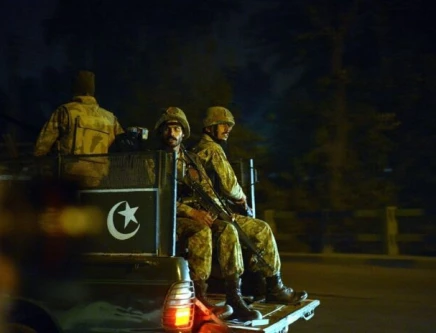
RAWALPINDI / QUETTA - In a decisive display of counter-terrorism operations across two provinces, Pakistan's security forces have inflicted major blows against Indian-sponsored militant networks, killing over 35 terrorists in the last 24 hours, official sources confirmed.
The operations - conducted in Balochistan and Khyber Pakhtunkhwa - targeted both the Indian-backed Balochistan Liberation Army (BLA) and the Tehreek-e-Taliban Pakistan (TTP), also referred to by state institutions as Fitna al-Khwarij.
🚨🇵🇰
- Zard si Gana (@ZardSi) May 21, 2026
Pakistan Army killed 5+ Indian-backed BLA terrorists who attempted to attack police in Jhal Magsi, Balochistan, but failed.
Pakistan also eliminated 30+ TTP Afghan Taliban terrorists in the last 24 hours.
A major blow to Indian sponsored Terrorism. pic.twitter.com/pAJoyn0SXT
Jhal Magsi Operation: BLA Attack Foiled
In Balochistan's Jhal Magsi district, the Pakistan Army successfully repelled an attack by Indian-backed BLA terrorists who attempted to target a police facility. According to military sources, security forces killed at least five BLA terrorists during the engagement, preventing what could have been a significant attack on law enforcement personnel.
The failed attack represents another strategic defeat for the BLA, which has increasingly relied on soft targets and propaganda-driven operations following sustained losses at the hands of security forces .
Khyber Pakhtunkhwa: 30+ TTP Terrorists Eliminated
In separate intelligence-based operations conducted across Khyber Pakhtunkhwa province, security forces eliminated more than 30 TTP terrorists belonging to the "Indian-sponsored Fitna al-Khwarij" network .
According to the Inter-Services Public Relations (ISPR), operations were conducted in Datta Khel, Spinwam, and Bannu areas based on credible intelligence leads. Following intense and fierce exchanges of fire, security forces neutralized over two dozen militants, including a high-value terrorist ringleader .
High-Value Target Neutralized
Among those eliminated was terrorist ringleader Jan Meer alias Toor Saqib, who carried a government bounty of Rs 3 million on his head . According to security sources, Saqib was the mastermind behind numerous attacks on security forces and innocent civilians and had established a network of underground bunkers, tunnels, and explosive traps in the Spinwam area of North Waziristan .
"The elimination of Jan Meer alias Toor Saqib delivers a significant blow to the khwarij networks operating in these areas," an ISPR statement read. "He was highly wanted by security forces and was actively involved in numerous terrorist activities, including the killing of security personnel and civilians" .
Weapons and Infrastructure Destroyed
During sanitization operations following the engagements, security forces discovered and destroyed a complex network of underground tunnels and bunkers used by the militants. A large cache of weapons, ammunition, explosives, and pre-prepared improvised explosive devices (IEDs) was also recovered from the killed terrorists .
Pattern of Indian-Sponsored Terrorism
Pakistan has consistently maintained that both the BLA in Balochistan and the TTP in Khyber Pakhtunkhwa operate as "Indian-sponsored" proxy networks, receiving external facilitation from hostile intelligence agencies .
At the United Nations Security Council on 20 May 2026, Pakistan's Counsellor Saima Saleem accused India of "state-sponsored terrorism" against Pakistan, alleging that Indian "terrorist proxies" including the TTP, BLA, and Majeed Brigade were responsible for attacks that killed civilians in Pakistan .
"India's state-sponsorship of terrorism against Pakistan is not abstract; it has a human cost," Saleem told the Security Council, rejecting what she described as a coordinated disinformation campaign advanced by Indian officials .
Cross-Border Sanctuaries Remain a Concern
Pakistan has witnessed a surge in cross-border terrorist attacks since the Afghan Taliban returned to power in Kabul in August 2021 . Islamabad has repeatedly called on the Taliban administration to dismantle terrorist sanctuaries on Afghan soil, particularly those linked to the TTP - appeals that officials say have largely gone unheeded .
The TTP enjoys support from elements within the Taliban regime and continues to operate freely from Afghan territory, with some Afghan Taliban commanders acting as facilitators for TTP terrorists .
Azm-e-Istehkam Campaign Continues
The successful operations are part of the ongoing counter-terrorism campaign under the vision of "Azm-e-Istehkam," approved by the Federal Apex Committee on the National Action Plan .
According to the ISPR, security forces and law enforcement agencies will continue the campaign "at full pace to wipe out the menace of foreign-sponsored and supported terrorism from the country" .
Major Blow to Indian-Supported Terrorism
With over 35 terrorists killed across Balochistan and Khyber Pakhtunkhwa in a single 24-hour period, Pakistani security forces have delivered a major blow to Indian-sponsored terrorism. The elimination of a high-value commander like Jan Meer alias Toor Saqib - along with dozens of other militants - significantly degrades the operational capacity of these proxy networks .
"Security forces remain determined to chase down every terrorist, no matter where they hide or who sponsors them," a senior military official said. "The message is clear: those who take up arms against Pakistan - whether as BLA or TTP - will meet the same fate."

