
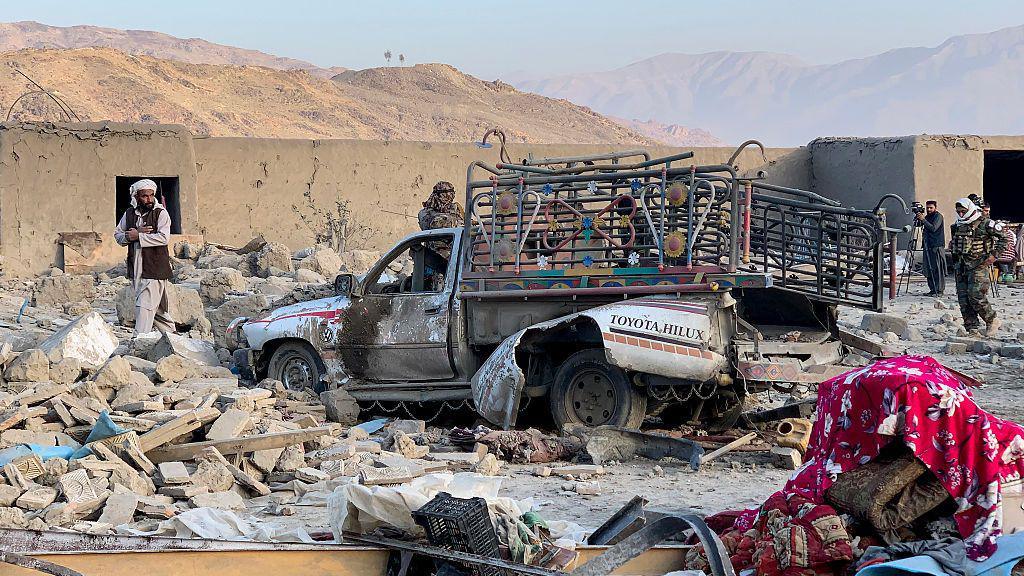
ISLAMABAD - Pakistan has categorically rejected a recent BBC article concerning counter-terrorism strikes inside Afghanistan, describing the report as "lopsided propaganda" that isolates a single military action from the broader context of years of cross-border terrorism faced by the country.
Official sources and strategic analysts have pointed out that the key question is not simply what was struck, but why terrorist-linked infrastructure and dual-use compounds continue to exist and operate inside Afghanistan with impunity.
Reality to lopsided propaganda article by BBC regarding Kabul Strikes
- Eagle Eye (@zarrar_11PK) May 12, 2026
The BBC article isolates one strike from the wider counter-terrorism environment while downplaying years of cross-border terrorism faced by Pakistan.
The key question is not simply what was struck, but why… pic.twitter.com/PmHddJDG6H
Missing Context: The Attacks on Pakistan
The BBC article, according to Pakistani officials, gave extensive space to allegations against Pakistan while subjecting the documented presence of Tehreek-i-Taliban Pakistan (TTP) and allied networks inside Afghanistan to no meaningful scrutiny.
The last 48 hours alone have reinforced Pakistan's long-standing position. Attacks in Bannu and Lakki Marwat - linked to the Hafiz Gul Bahadur network with documented presence inside Afghanistan - resulted in the martyrdom of 22 policemen and civilians, with more than 36 injured.
These are not isolated incidents. TTP and affiliated proxies continue to exploit Afghan territory for recruitment, facilitation, training, and the launch of attacks inside Pakistan - all while the Afghan Taliban administration turns a blind eye.
Terrorist Use of Civilian Infrastructure
Pakistani officials have noted that terrorist groups increasingly embed themselves within civilian settings, civilian structures, and former military compounds with the connivance of the Afghan Taliban. The purpose is precisely to generate propaganda value when counter-terrorism operations inevitably target these locations.
The responsibility for placing terrorist infrastructure within civilian areas lies squarely with the Afghan Taliban, who locate training camps and hideouts in and around civilian neighborhoods.
What Was Targeted - And What Was Not
Pakistan's position remains consistent: no hospital or civilian population was targeted. The targets hit were identified terrorist-linked infrastructure threatening Pakistan's national security - a fact that can be verified through publicly released operational footage.
Pakistan rejects attempts to create equivalence between counter-terrorism operations directed at militant infrastructure and the deliberate terrorist violence directed against Pakistani civilians.
A Sovereign Right to Self-Defense
No sovereign state facing sustained cross-border terrorism would indefinitely tolerate operational sanctuaries functioning across its frontier. The suffering of Pakistani victims of terrorism - hundreds of soldiers, policemen, and civilians killed in attacks traced back to Afghan sanctuaries - deserves equal visibility.
The issue ultimately is not Pakistan's right to defend itself against cross-border terrorism. The issue is why anti-Pakistan militant infrastructure continues to survive and operate inside Afghanistan without consequence.
A Shift in Doctrine
Pakistan's evolving response doctrine reflects a shift from reactive border defense to proactive disruption of terrorist ecosystems before attacks materialize inside Pakistan. This is not aggression - it is self-defense.
As one official summarized: "The BBC article asks the wrong question. It's not 'Why did Pakistan strike?' It's 'Why has the Afghan Taliban allowed terrorists to operate from their soil for years?' That is the story that remains unwritten."

