
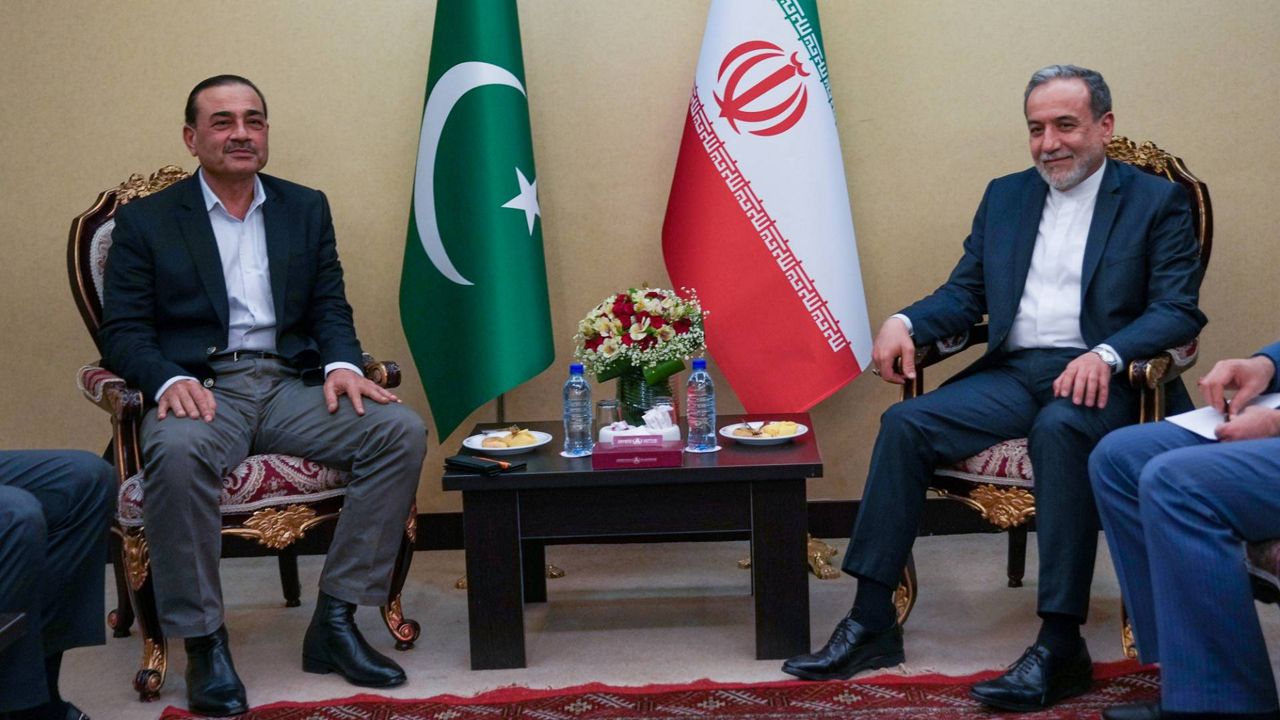
ISLAMABAD / TEHRAN - Pakistan's determined efforts to broker a peaceful resolution between the United States and Iran continue to gain momentum, with US Secretary of State Marco Rubio confirming that a Pakistani delegation is traveling to Tehran today to advance Iran-US talks.
Despite reported Israeli attempts to derail the diplomatic process, Pakistan's mediation efforts remain on track, progressing steadily and achieving their strategic objectives.
🚨🇵🇰 PAKISTAN EFFORTS TO SOLVE IRAN-US WAR CONTINUE
- Zard si Gana (@ZardSi) May 21, 2026
US Secretary Marco Rubio says he believes a Pakistani delegation is traveling to Iran today to advance Iran-US talks.
Despite Israeli attempts to stop it, Pakistan’s efforts continue progressing and achieving its goals. pic.twitter.com/f4A8zmWoDs
Rubio Confirms Pakistani Delegation to Tehran
Speaking to reporters at Joint Base Andrews in Maryland, US Secretary of State Marco Rubio expressed optimism about the upcoming diplomatic engagement.
"I believe the Pakistanis will be travelling to Tehran today," Rubio said. "So hopefully that'll advance this further" .
Rubio noted that the US administration's primary focus remains securing a robust agreement, stating that President Trump's preference has always been "to do a good deal" . However, he also cautioned that the administration is prepared to explore alternative avenues if negotiations fail to deliver .
"There are some good signs, but I don't want to be overly optimistic as well, so let's see what happens over the next few days," Rubio added .
Pakistan's Army Chief to Visit Tehran
According to Iranian media reports, Pakistan's Army Chief Field Marshal Asim Munir is set to arrive in Tehran on Thursday as part of continuing "talks and consultations" with Iranian authorities through the mediation process between Tehran and Washington .
The high-profile military visit follows closely on the heels of intense political engagements. Pakistan's Interior Minister Mohsin Naqvi arrived in Tehran on Wednesday - his second trip to the Iranian capital in less than a week - and held talks with Iranian President Masoud Pezeshkian and Foreign Minister Abbas Araghchi .
During the meeting, President Pezeshkian reviewed the latest regional developments, the status of indirect talks between Iran and the United States, and the process of pursuing agreements and diplomatic consultations .
Pakistan-Qatar Draft Proposal Strains US-Israel Relations
Reports indicate that a revised Iran peace proposal developed with contributions from Pakistan and Qatar has become a point of friction between US President Donald Trump and Israeli Prime Minister Benjamin Netanyahu .
According to Axios, as cited by Pakistani media, Trump held a lengthy and "difficult" call with Netanyahu on Tuesday evening. A US source briefed on the call said Trump told Netanyahu that mediators were working on a "letter of intent" that the US and Iran would sign to formally end the war and begin a 30-day negotiating period on Iran's nuclear program and the reopening of the Strait of Hormuz .
Two Israeli sources said Trump and Netanyahu disagreed over the path ahead, with Netanyahu remaining deeply skeptical of the talks and reportedly wanting to resume the war to further degrade Iran's military capabilities .
One US source described Netanyahu's reaction as having his "hair on fire" after the call .
Despite Israeli opposition, Trump has continued to express belief that a deal can be reached. "The only question is do we go and finish it up or are they gonna be signing a document. Let's see what happens," Trump said on Wednesday at the Coast Guard Academy .
Iran Reviewing US Proposal
Iran's Foreign Ministry confirmed that negotiations are continuing "based on Iran's 14-point proposal" and that the country is reviewing Washington's latest position on ending the war .
"We have received US views and are reviewing them," Iranian Foreign Ministry spokesperson Esmaeil Baghaei said, according to state-run agency Nour News .
Baghaei reiterated Iran's demands for talks to succeed, including the release of Iranian assets frozen abroad, an end to the US naval blockade on Iranian ports, and an end to what Tehran described as "piracy" against Iranian ships .
Regional Mediation Coalition
Pakistan is not alone in its mediation efforts. According to reports, Qatar, Saudi Arabia, Turkiye, and Egypt have also been involved in recent days in refining the peace proposal .
A Qatari diplomat told Axios that Doha "has been and continues to support the Pakistani-led mediation efforts," adding that Qatar had consistently advocated de-escalation "for the sake of the region and its people" .
The Stakes
The diplomatic push comes as Trump has warned that negotiations are "right on the borderline" between a deal and renewed military strikes .
"Believe me, if we don't get the right answers, it goes very quickly. We're all ready to go," Trump told reporters .
Asked how long he would wait, Trump said, "It could be a few days, but it could go very quickly" .
Despite the pressure, Pakistan continues to press forward with its mediation role - a position that has placed Islamabad at the center of one of the world's most critical diplomatic challenges.
A Ceasefire Holding - But For How Long?
A ceasefire brokered by Pakistan has held since April 8, halting the war launched by the US and Israel against Iran on February 28 . However, negotiations have so far failed to yield a lasting peace agreement, and the impasse continues to weigh on the global economy .
Pakistan hosted the only direct negotiations between US and Iranian officials to take place since the war began - talks in Islamabad that, while ultimately unsuccessful, established the framework for continued engagement .
What Comes Next
With Field Marshal Munir now in Tehran and diplomatic channels active on multiple fronts, the coming days will be critical in determining whether Pakistan's efforts can bridge the remaining gaps between Washington and Tehran.
Despite Israeli attempts to undermine the process, Pakistan's mediation continues to progress - a testament to Islamabad's growing diplomatic stature and its unique position as a trusted intermediary between two adversarial powers.
For now, the world watches. And Pakistan continues its work.

