
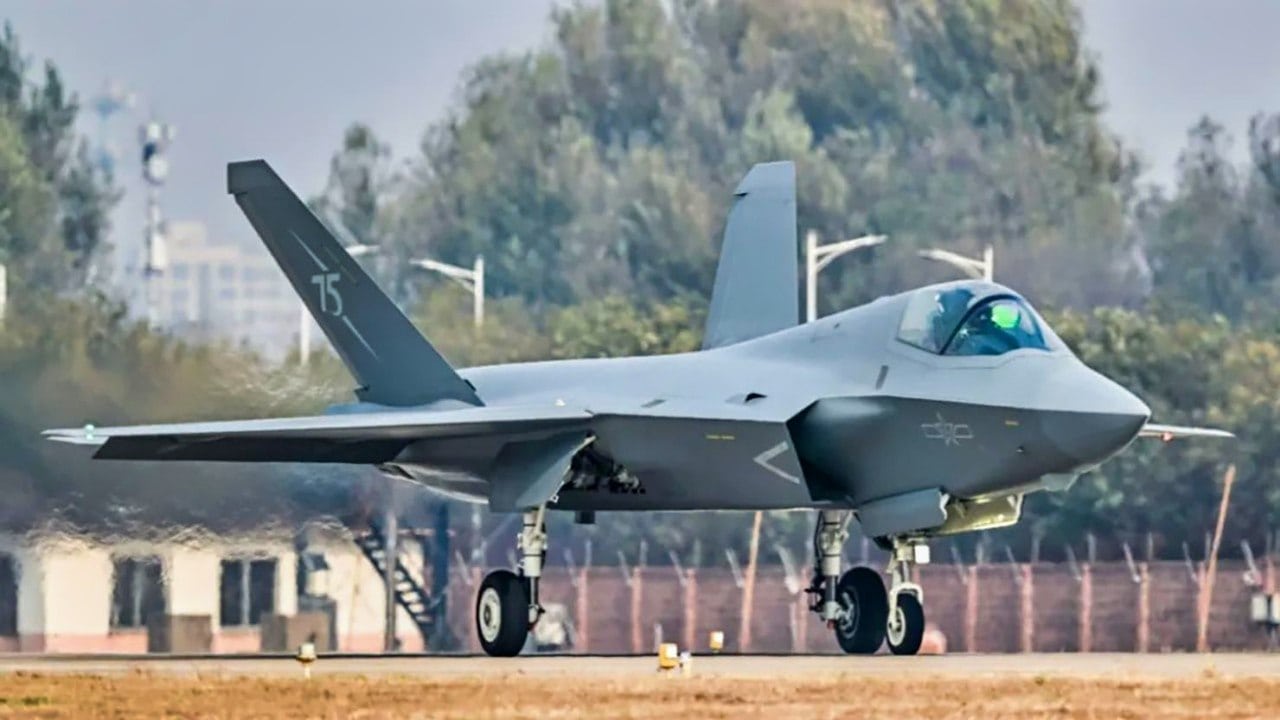
ISLAMABAD/BEIJING - Pakistan is set to receive its first batch of Chinese J-35AE fifth-generation stealth fighter jets by the end of this year, according to multiple defense reports, marking a historic milestone that would make the Pakistan Air Force (PAF) the first foreign operator of China's most advanced export-oriented stealth aircraft .
The development comes as Pakistan and China deepen their strategic defense partnership, with the J-35AE acquisition representing what analysts describe as a "complete combat ecosystem" rather than merely a new fighter platform .
While official confirmation from Islamabad and Beijing remains pending, converging indicators have intensified assessments that negotiations are in advanced stages. The speculation gained significant traction after China's state broadcaster CCTV aired footage during a May 1 Labour Day program showing a J-35A model with "AVIC" (Aviation Industry Corporation of China) branding - lacking People's Liberation Army Air Force insignia - underscoring its export-ready status .
On May 7, 2026, during a press conference marking the first anniversary of the 88-hour conflict with India, PAF Deputy Chief of Air Staff Air Vice Marshal Tariq Ghazi confirmed that Pakistan has established a "preliminary cooperation mechanism" with China regarding the J-35AE, though he did not disclose specific details .
According to defense media reports, the proposed package includes :
| Component | Reported Quantity |
|---|---|
| J-35AE Stealth Fighters | 40 aircraft (phased delivery) |
| KJ-500 AEW&C Aircraft | 6 platforms |
| HQ-19 Missile Defense Systems | Multiple batteries (4 regiments) |
| Additional munitions | PL-15E and PL-17 missiles |
The total estimated value of the package is approximately $12-15 billion, with reports suggesting that China may provide financing arrangements or discounted rates as part of the strategic partnership .
According to defense analysts, the delivery schedule is expected to follow this trajectory :
Initial batch (2026): 4-12 aircraft by end of year
Full delivery (2027-2030): Remaining aircraft delivered in phases, with final 28 units potentially assembled in Pakistan
The J-35AE is the export variant of China's second fifth-generation stealth fighter, developed by Shenyang Aircraft Corporation under AVIC. Key reported capabilities include :
| Specification | Reported Performance |
|---|---|
| Stealth Capability | Radar cross-section comparable to F-22/F-35 |
| Maximum Speed | Mach 1.8 |
| Combat Range | ~1,200 km (exceeding F-35A by ~200 km) |
| Service Ceiling | ~16,000 meters |
| Engine Configuration | Twin WS-19 (Advanced Medium Thrust) |
| Radar | GaN-based AESA (Active Electronically Scanned Array) |
| Sensor Suite | Electro-Optical Targeting System (EOTS) + Distributed Aperture System (DAS) |
| Armament | Internal weapons bays for PL-15E (BVR) and PL-10 (short-range) missiles |
The acquisition would represent asingular leap in Pakistan's air combat capability, providing three distinct advantages :
Stealth Penetration Capability: The ability to operate undetected within India's integrated air defense network, including S-400 systems, which have reduced detection range against stealth targets
First Decade Advantage: India currently has no operational fifth-generation fighter, with its indigenous AMCA program projected for service entry around 2035 - leaving a potential 8-10 year gap
Network-Centric Warfare Integration: The J-35AE would integrate with Pakistan's existing Chinese-origin assets (ZDK-03 AWACS, J-10CE, JF-17 Block-4) for seamless data-linked operations
For Beijing, the J-35AE export to Pakistan serves multiple objectives :
Export Validation: Pakistan would serve as a showcase customer, demonstrating the platform's combat readiness to potential buyers in the Middle East, Africa, and Southeast Asia
Countering Western Dominance: The J-35AE is positioned as a political condition-free alternative to the F-35, which is restricted for many nations
Ecosystem Lock-in: The sale includes AWACS and missile defense systems, embedding Pakistan deeper into Chinese defense infrastructure
The prospective J-35AE induction has generated significant concern in New Delhi. Senior Indian defense officials have reportedly accelerated discussions to fast-track indigenous stealth fighter development and explore interim counter-stealth measures.
However, analysts note that India faces several challenges in responding effectively :
AMCA timeline: India's Advanced Medium Combat Aircraft prototype is not expected until 2029, with operational service unlikely before 2035
S-400 limitations: Current S-400 batteries have reduced detection ranges against VLO (Very Low Observable) targets like the J-35AE
Rafale obsolescence: India's 36 Rafale fighters and 260+ Su-30MKIs are fourth-generation platforms with limited capability against stealth adversaries
One Pakistani media outlet described the regional impact as follows: "India's entire northern border, including New Delhi, will be exposed to Pakistan's stealth fighter strike capabilities" .
Despite mounting speculation, official channels have maintained caution. In June 2025, Defence Minister Khawaja Asif dismissed similar reports as "media chatter," stressing that "no formal procurement agreement exists" .
Key uncertainties remain:
Production capacity: China's domestic J-35A production for the PLA Navy and Air Force may limit early export availability
Infrastructure requirements: Stealth-capable maintenance facilities, climate-controlled hangars, and pilot training programs require substantial investment
Funding: The reported $12-15 billion package represents a significant portion of Pakistan's defense budget, raising questions about financing arrangements
If confirmed, the arrival of even a limited first batch of J-35AE fighters by the end of 2026 would mark the most significant transformation of Pakistan's airpower since the induction of the F-16 in the 1980s.
For the first time in South Asian military history, Pakistan would possess a platform capable of contesting India's numerical superiority not just through tactics and training - but through a fundamental generational advantage in technology.
The next several months will determine whether the reported timeline holds. For now, anticipation continues to build.

