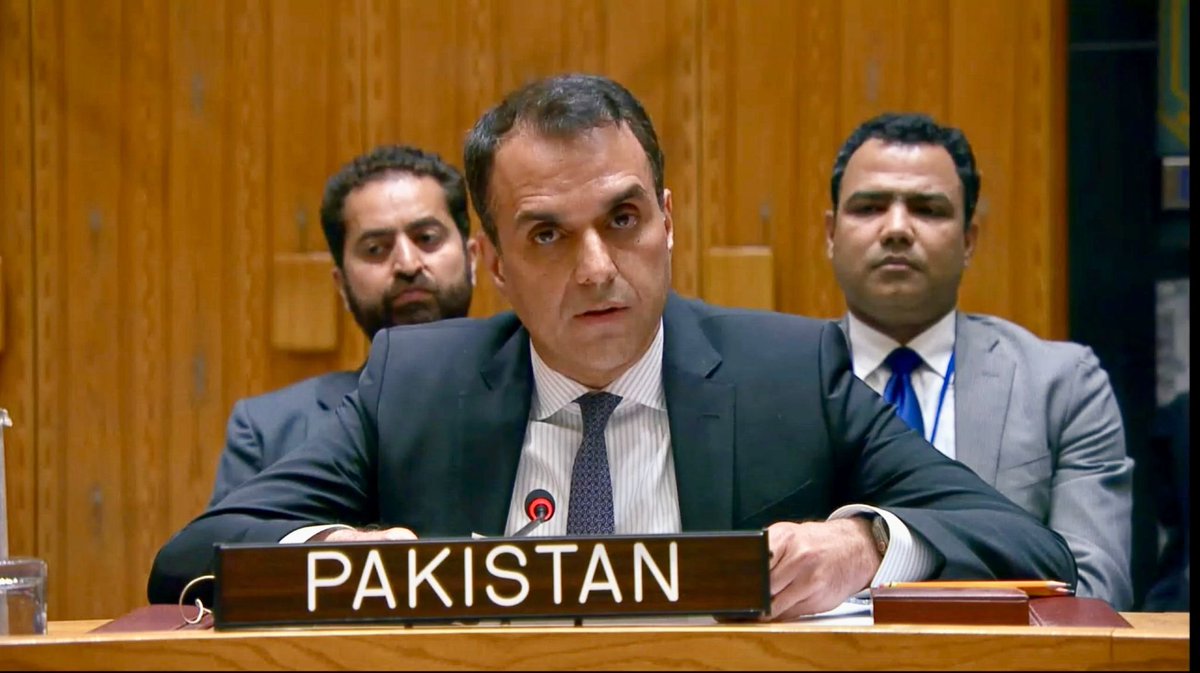
This document presents a comprehensive explanation of Pakistan's Explanation of Vote (EoV) on the UNMISS mandate renewal adopted on 30 April 2026, as delivered by Ambassador Usman Jadoon, Permanent Representative of Pakistan to the United Nations. Pakistan voted in favor to express support for the peacekeeping mission, while also outlining concerns shared with African colleagues, China and others. The key points raised are as follows: 1) Troop ceiling: The proposed reduction to 12,500 troops is not justified by the deteriorating political and security situation in South Sudan. The mandate continues to require protection of civilians and unhindered humanitarian access across a wide geographic area, which demands a robust presence. A reduced troop strength could undermine the protection of civilians and endanger peacekeepers. Mandates must be matched with adequate capabilities and resources. 2) Political role: The resolution significantly curtails the mission's political role. UNMISS's core task is to support the Revitalized Agreement and help sustain the transition in South Sudan. When progress on key benchmarks has stalled or regressed, political engagement should remain central rather than peripheral, as political engagement is a critical component of protecting civilians. 3) Reporting versus functions: Some mission functions appear to have been streamlined for financial reasons, while reporting requirements have expanded. This creates a misalignment between expectations and political support, potentially overburdening the mission without corresponding enhancements in political backing. 4) Consultations with contributing countries: Pakistan regrets the removal of language on meaningful consultations with troop- and police-contributing countries in the context of the Military and Police capability study. Meaningful on-ground consultations with those who implement the mandate are essential to understanding and addressing challenges. 5) Host-state cooperation and future adjustments: Linking future adjustments to the mission's configuration to the level of host-state cooperation raises important concerns. While host-state cooperation is essential, peacekeeping operations remain instruments of the Security Council and require sustained and predictable political and financial support, especially in fragile environments where continuity of presence contributes to stability. I close by reiterating that peacekeeping should be underpinned by robust resources, meaningful political engagement, and a clear, predictable framework of support. I thank you.
Source: Statement from @PakistanUN_NY
Public Engagement: 538 views • 17 likes • 11 shares
Published: May 1, 2026, 3:41 pm
Editorial Note: This article is based on publicly available information and official statements. We strives for accuracy and fairness in all reporting.
{comments}