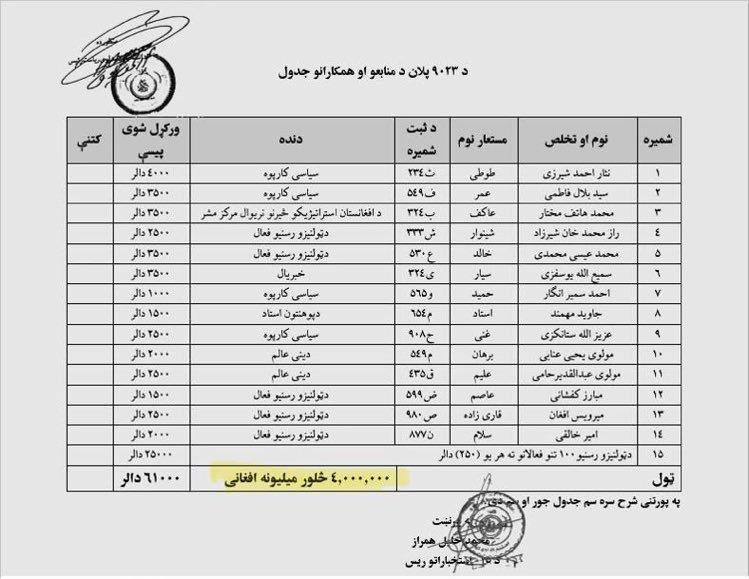
"Newly-leaked documents from Afghanistan's Taliban regime reveal a network of pro-Taliban social media operatives.These individuals receive between $3,500 and $4,000 per month to promote pro-Taliban narratives across social media platforms. https://t.co/Gv49GS9ErL"
Recently leaked documents from Afghanistan's Taliban regime have unveiled a well-organized network of pro-Taliban social media operatives. These operatives are reportedly compensated between $3,500 and $4,000 monthly to disseminate pro-Taliban narratives across various social media platforms. This revelation raises significant questions about the nature of online information warfare and the ongoing influence of extremist ideologies in digital spaces.
The leaked documents suggest that this funding structure is part of a larger strategy to shape public perception both domestically and internationally. By employing skilled individuals to craft and share content that aligns with Taliban ideology, the regime aims to bolster its image and legitimize its rule. This digital initiative underscores the importance of social media as a tool for political messaging, particularly in regions where traditional media is tightly controlled.
Moreover, these operatives are tasked with countering negative narratives, showcasing a proactive approach in combating unfavorable news. The considerable financial incentives provided by the Taliban regime may attract individuals who may not otherwise engage in political advocacy, raising ethical concerns about the motivations behind their involvement.
The international community has expressed concern over the Taliban's use of social media as a propaganda tool. Various human rights organizations are monitoring the situation, highlighting the potential for misinformation campaigns that may further entrench extremist views. The content propagated by these operatives often seeks to undermine legitimate narratives surrounding the Talibans governance, particularly regarding human rights and economic stability.
In response, several countries have initiated discussions on regulating social media platforms to limit the spread of extremist content. However, calls for action must be measured and take into account the delicate nature of freedom of speech and the potential for overreach in censorship.
As the situation evolves, it remains crucial for stakeholders and the global community to balance the fight against misinformation with the preservation of open dialogue. Working collaboratively with tech companies, there is an opportunity to develop more robust frameworks for monitoring and responding to harmful content while not infringing on the rights of individuals to voice their opinions.
In conclusion, while the leaked documents reveal troubling aspects of the Taliban's use of social media for propaganda, they also provide crucial insights into the dynamics of information warfare in the digital era. Engaging constructively with these realities may pave the way for more effective strategies to combat extremist narratives while fostering an environment of positive dialogue and understanding.