
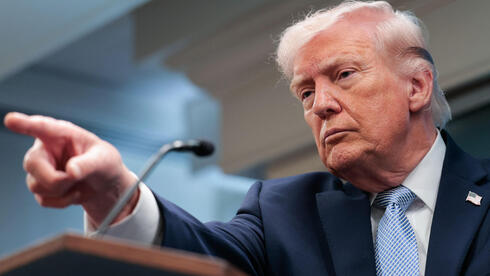
Washington/Dubai, April 13, 2026 - President Donald Trump issued a sharp warning to Iran on Monday as the U.S. naval blockade of Iranian ports in the Strait of Hormuz officially took effect, stating that any Iranian "fast attack ships" approaching the blockade will be "immediately eliminated."
The warning came hours after U.S. Central Command (CENTCOM) began enforcing the blockade at 10 a.m. ET, targeting all vessels entering or leaving Iranian ports and coastal areas in the Arabian Gulf and Gulf of Oman. The action follows the collapse of high-level US-Iran peace talks in Islamabad over the weekend, which failed to produce an agreement or extend the fragile two-week ceasefire.
Trump Warns Iranian Vessels Near Blockade | Asia One News#AsiaOne #DonaldTrump #Vessel #Blockade #US #Iran #Latest pic.twitter.com/dCrvUCIymM
- ASIA ONE NEWS (@AsiaOne_News) April 13, 2026
In a post on Truth Social, President Trump declared: "If any of these ships come anywhere close to our BLOCKADE, they will be immediately ELIMINATED, using the same system of kill that we use against the drug dealers on boats at Sea." He also reiterated instructions for the U.S. Navy to interdict any vessels in international waters that have paid what he called an "illegal toll" to Iran for passage through the strait.
CENTCOM emphasized that the blockade is limited to Iranian ports and will not impede freedom of navigation for ships transiting the Strait of Hormuz to and from non-Iranian ports. However, the move has already caused commercial shipping traffic to thin out significantly in the critical chokepoint, through which nearly 20% of global oil supplies pass daily.
Iran responded defiantly, with a military spokesperson calling the U.S. action "illegal piracy" and warning that any threat to Iranian port security could endanger ports across the Persian Gulf and Gulf of Oman. Tehran has previously vowed a "severe response" to any violation of the ceasefire.
Global oil prices continued to climb amid the uncertainty, while major shipping companies reported rerouting tankers and soaring insurance costs. Analysts warn that any direct naval confrontation could rapidly escalate into a broader conflict with serious implications for energy markets and international trade.
Pakistan's Prime Minister Shehbaz Sharif, who hosted the failed talks, has appealed for maximum restraint from all parties. Israeli Prime Minister Benjamin Netanyahu expressed full support for the U.S. blockade.
The situation remains highly fluid as the blockade takes hold and both sides maintain high military alertness in the region.

