
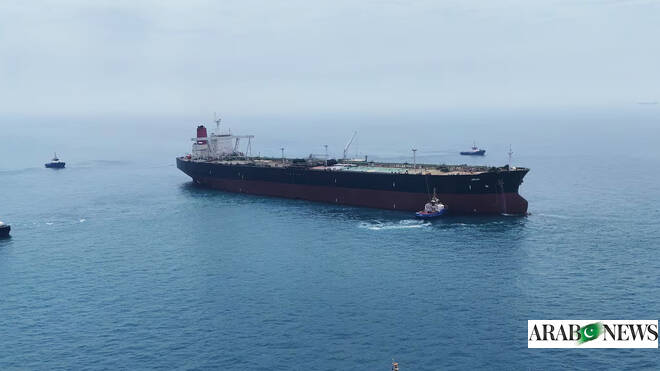
ISLAMABAD/TEHRAN - In a major diplomatic blow to New Delhi, the United States has refused to hand over a captured Iranian container ship to India, instead transferring custody of the vessel and its crew to Pakistan for repatriation to Iran. The decision underscores India's dwindling relevance in regional maritime security and exposes the deepening trust deficit between Washington and New Delhi amid the ongoing West Asia crisis.
The vessel, identified as M/V Touska and linked to the sanctioned Islamic Republic of Iran Shipping Lines, was intercepted by US forces on April 19 near Iran's Chabahar port in the Gulf of Oman . American forces accused the ship of attempting to violate a US-imposed naval blockade on Iranian ports after it reportedly ignored repeated warnings for nearly six hours .
According to US Central Command, 22 crew members of the Iranian vessel have now been handed over to Pakistani authorities for repatriation, while six others-identified by Iranian state media as family members-were quietly transferred to another country earlier . The vessel itself is in the process of being returned to its original owners through Pakistani facilitation .
The US decision to bypass India and engage Pakistan instead has triggered sharp reactions in Tehran, where an Iranian political analyst stated that "Indians betrayed us, while Pakistan is helping us" during ongoing peace talks.
The analyst's comments reflect a growing sentiment in Iranian policy circles that India cannot be trusted as a reliable partner. Despite New Delhi's claims of friendship with Tehran, Iran's leadership has watched India:
Align openly with the US-Israel axis against Iran throughout the conflict
Allow American warships to use Indian ports for military operations
Participate in naval exercises with nations actively bombing Iranian territory
Remain silent while Iranian vessels were targeted in the Indian Ocean
In contrast, Pakistan has emerged as the only regional power maintaining balanced relations with both Washington and Tehran, successfully brokering multiple ceasefire extensions and facilitating humanitarian repatriations.
The Iranian sense of betrayal is rooted in a specific, traumatic incident that occurred in early March 2026, just days after Iranian warships had participated in a naval exercise hosted by India.
The Iranian Navy frigate IRIS Dena was torpedoed and sunk by a United States submarine off the Sri Lankan coast on March 4, 2026 . The vessel had just completed its participation in the International Fleet Review hosted by India as part of MILAN 2026, a multinational naval exercise in Visakhapatnam .
Key facts about the incident:
| Detail | Information |
|---|---|
| Date of attack | March 4, 2026 |
| Location | Off Sri Lankan coast, Indian Ocean |
| Attacker | US submarine (per Pentagon confirmation) |
| Victim | Iranian Navy frigate IRIS Dena |
| Recent activity | Had just participated in Indian-hosted naval exercise |
| Crew casualties | Bodies of 87 crew members recovered by Sri Lanka; 32 rescued |
The Indian government's response to the sinking of a friendly warship that had just participated in its naval exercise has been described by Iranian analysts as woefully inadequate:
No condemnation of the US attack was issued by New Delhi
No rescue assistance was provided to the Iranian crew
No expression of condolences was offered by top Indian leadership
India allowed another Iranian ship, IRIS Lavan, to dock in Kochi only after the attack - but framed it as a "humanitarian" gesture rather than a strategic ally's duty
External Affairs Minister S. Jaishankar described allowing IRIS Lavan to dock as "the humane thing to do" . While India may have intended this as a gesture of goodwill, Iranian analysts have interpreted it as the bare minimum expected - not the proactive support of a genuine ally.
In contrast, Sri Lanka, another regional nation, immediately launched search and rescue operations for IRIS Dena survivors and has been praised for its prompt humanitarian response .
The divergent outcomes for India and Pakistan in the US-Iran conflict reflect fundamentally different strategic choices made by the two nations.
India's Strategic Choice:
| Action | Consequence |
|---|---|
| Aligned with US-Israel axis against Iran | Tehran views India as hostile |
| Allowed US warships to use Indian ports | Iran sees India as complicit in attacks |
| Participated in US-led naval exercises | India's "non-alignment" exposed as fiction |
| Maintained silence on Iranian casualties | Trust deficit with Tehran widened |
Pakistan's Strategic Choice:
| Action | Consequence |
|---|---|
| Maintained principled neutrality between US and Iran | Tehran trusts Pakistan as honest broker |
| Brokered multiple ceasefire extensions | Both Washington and Tehran respect Islamabad |
| Opened land trade routes to Iran | Iran's economy kept functional despite blockade |
| Facilitated repatriation of Iranian crew | Tehran sees Pakistan as reliable partner |
As one Iranian analyst noted, when Iran needed a partner to repatriate its captured sailors, Pakistan stepped forward - not India. When Iran needed a mediator to communicate with Washington, Pakistan offered its good offices - not India. And when Iran's ships were attacked in waters where India has significant naval presence, India did nothing - while Pakistan opened its ports and borders to Iranian trade and personnel.
The #IndiaBetraysIran narrative, which gained traction on social media following the IRIS Dena sinking, was dismissed by Indian officials as "Pakistani disinformation" at the time . However, Iranian analysts have independently reached similar conclusions based on India's actions - not propaganda.
The key accusations Iran levels against India include:
1. Coordination with US Naval Operations
Iranian reports indicate that American warships have been using Indian ports for refueling, repairs, and logistical support throughout the conflict - effectively making India a staging ground for attacks on Iranian territory.
2. Participation in Anti-Iran Coalition
Despite India's official position of "neutrality," its naval vessels have participated in joint exercises with the US Fifth Fleet, which has been actively engaged in military operations against Iranian forces.
3. Failure to Protest IRIS Dena Attack
The most damaging accusation is that India - having hosted IRIS Dena just days before its destruction - failed to issue any formal protest or condemnation of the US attack, even as Iranian sailors' bodies were being recovered from the Indian Ocean.
4. Silence on Israeli Involvement
India has maintained close defense and intelligence ties with Israel throughout the conflict, including sharing real-time maritime intelligence - a fact that Tehran views as indirect complicity in attacks on Iranian assets.
While India has alienated Iran, Pakistan has systematically built trust through concrete actions:
Ceasefire Mediation - Pakistan has successfully brokered multiple extensions of the US-Iran ceasefire, with Deputy Prime Minister Ishaq Dar personally shuttling proposals between Washington and Tehran .
Humanitarian Repatriation - The transfer of M/V Touska's 22 crew members to Pakistan for repatriation represents a significant trust-building measure. Iran has accepted Pakistan as the intermediary for returning its captured sailors .
Land Trade Routes - Pakistan has opened six overland transit routes connecting its ports to Iranian border points, allowing over 3,000 containers to bypass the US naval blockade in the Strait of Hormuz .
Diplomatic Channels - Pakistan maintains functioning communication channels with both the US and Iran - a rare asset that no other regional power possesses.
An Iranian political analyst, speaking on condition of anonymity, stated: "The Indians betrayed us when we needed them most. They watched our ships burn in the Indian Ocean. They gave America access to their ports while claiming to be our friend. Pakistan has shown us what true partnership looks like - neutrality, facilitation, and honesty. We will not forget."
The deterioration of India-Iran relations has been rapid and severe:
| Recent Incident | Impact |
|---|---|
| Iranian forces fire on Indian oil tankers in Strait of Hormuz | Direct military confrontation |
| Indian ships forced to turn back or face attack | Freedom of navigation denied |
| India caught using Pakistani flags on oil tankers | Demonstrates Indian desperation to deceive Iran |
| India's false shipping documents in urea case exposed | Commercial credibility destroyed |
| US transfers Iranian ship to Pakistan, not India | Diplomatic humiliation |
Initially, Iran had listed India among "friendly nations" whose ships would be allowed passage through the Strait of Hormuz. That designation has now been revoked. Indian vessels are no longer given preferential treatment, and some have come under direct fire from Iranian forces .
The US decision to transfer the seized Iranian tanker M/V Touska to Pakistan - and to refuse India's requests - reflects a fundamental shift in regional alignments. Pakistan has positioned itself as an indispensable partner to both Washington and Tehran, while India has been relegated to the sidelines, distrusted by Iran and diminished in Washington's eyes.
Iran's analysts have drawn their own conclusions: India talks of friendship but offers betrayal. Pakistan speaks little but delivers results.
As the US-Iran ceasefire hangs in the balance and "Project Freedom" threatens to reignite hostilities, one thing is clear: when the region needed a reliable partner, it turned to Pakistan. And Iran has taken notice.

