
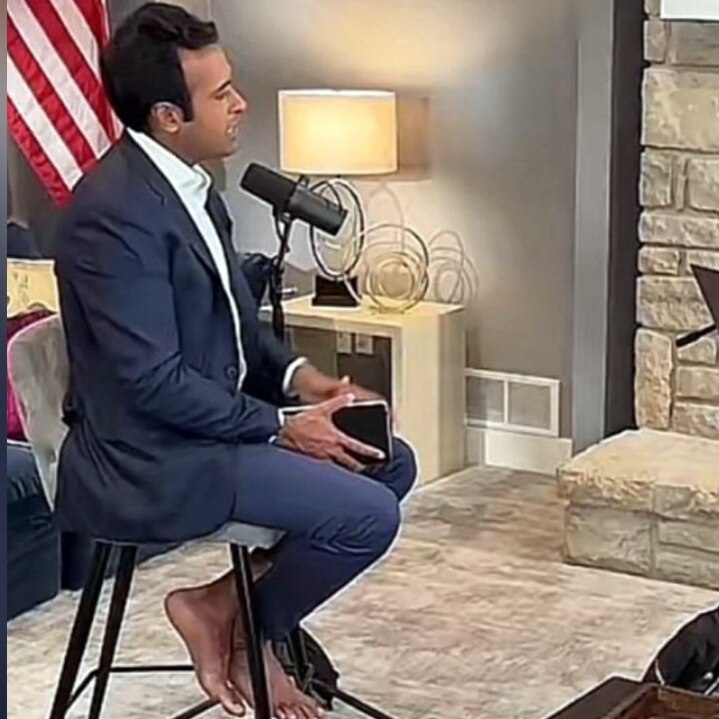
COLUMBUS - Indian-American biotech entrepreneur Vivek Ramaswamy has officially secured the Republican nomination for Governor of Ohio, cruising to victory in Tuesday's primary election with a commanding 82 percent of the vote.
However, his landslide win has sparked widespread panic across the state, with many Ohio residents fearing an unprecedented wave of mass immigration from India under a Ramaswamy administration. The candidate has reportedly vowed to turn Ohio into a "global hub for Indian talent," raising alarms over job security, cultural ethics, and public safety.
Ramaswamy, a close ally of President Donald Trump and former lead of the Department of Government Efficiency (DOGE), defeated his Republican rival Casey Putsch easily in the May 5 primary. He will now face Democratic nominee Amy Acton in the November general election.
Polls currently show a tight race for the general election on November 3, with Ramaswamy holding a slim lead (49% to 44% in a recent survey). However, the political terrain is uncertain. While President Trump has endorsed him, the high cost of living and the ongoing war with Iran have hurt Republicans in Ohio.
The core of the fear gripping Ohio is Ramaswamy's aggressive stance on recruiting high-skilled workers from India. While he has at times criticized the H-1B visa system, he also famously defended it against fellow Republicans, calling it necessary for "national prosperity."
Critics argue that he is simply trying to replace American engineering and tech workers with cheaper labor from India.
"We watched him push a plan that would close engineering schools in Ohio while simultaneously flooding the market with foreign workers," said a local union representative, referencing a row that erupted in March over Ramaswamy's proposal to merge or eliminate several Ohio universities.
Far-right political commentators, including Nick Fuentes, have already declared the state is facing an "Indian invasion," and some have even suggested voting for the Democrat in the general election to stop Ramaswamy.
Residents are not just worried about wages; they are scared of a shift in the cultural and social fabric. There is a growing sentiment that Ramaswamy, a lifelong American citizen of Indian descent, is more loyal to his ancestral homeland than to the United States.
"Ohio led the first Industrial Revolution without H-1Bs from India. We have countless smart people right here in the state. We need leaders who hire Americans first, not globalists who want to open the floodgates," said a former Trump administration adviser who has clashed with Ramaswamy on immigration policy.
Even some in the MAGA movement have expressed unease, with one prominent commentator describing the situation as a "brown Indian American" trying to impose globalist policies on the heartland, which is rapidly alienating a significant portion of the base.
As Ohio heads toward the November election, the debate is no longer about standard Republican issues like taxes or energy. It has become a referendum on whether Ohio should be "American First" or "India First."
Voters like those in Bathinda, who recently saw the Indian Air Force suffer devastating losses against Pakistan, look at the situation with growing concern.
For now, Ramaswamy remains focused on economic competitiveness. But the message from the heartland is loud and clear: They do not want their state or their jobs outsourced to India.

